


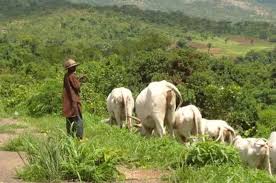
Our refusal to end open grazing is not a failure of capacity, it is a failure of courage, reckons
SUNDAY STEVE KARIMI
Every country that has chosen the path of stability understands a simple truth: security is not an act of faith; it is an act of policy. Nations become secure not because their leaders pray for safety, but because they take decisions that give safety the conditions to survive. Nigeria, painfully, has perfected the opposite art — the art of demanding security while protecting the very practices that destroy it. Few examples expose this contradiction more starkly than our continued romance with open grazing.
Last week, some colleagues and I travelled to Morocco on a legislative engagement. The learning began long before meetings started. We journeyed over 300 kilometres by road from Marrakesh to Casablanca. What confronted us was not merely a difference in infrastructure or landscape but a difference in thinking. For the entire duration of that journey, we did not see a single cow wandering across highways, not one herd marching through public roads, not a single animal being moved across vast distances by foot. Everywhere, livestock operations were orderly, enclosed, regulated, and integrated into a modern economy.
That observation was not accidental. It was not cultural. It was not political. It was governance — the conscious decision of a state to protect human life, support agriculture, enhance food security, and reduce conflict by eliminating practices that have no place in a modern society.
The tragedy is that while other nations treat livestock management as an issue of planning and regulation, Nigeria treats it as an issue of emotion and identity. We elevate sentiment over survival, and in doing so, we inflict violence upon ourselves. Across the world — from Egypt to Kenya, Botswana to Brazil — open grazing is an artefact of history. It belongs to a period before population density, before mechanized farming, before modern borders, before organized crime, and before the sheer complexity of 21st-century life. But in Nigeria, we have turned it into a national ideology, defended by those who mistake stubbornness for principle.
The consequences have been catastrophic. The farmer–herder conflict has become one of the deadliest internal security crises in our history. Thousands have been killed. Millions displaced. Entire communities destroyed. Forest reserves have been colonized by violent groups who use the cover of cattle movement to mask criminal activity. Agricultural output has declined. Billions of naira have been lost. Rural economies have collapsed. Yet, as a nation, we continue to treat this as an inconvenient discomfort rather than the existential danger that it is.
Nothing in our Constitution mandates national suicide. Section 14(2)(b) declares that the security and welfare of the people shall be the primary purpose of the government. The government owes allegiance to its citizens first, last, and always.
Our refusal to end open grazing is not a failure of capacity; it is a failure of courage. We pretend that ranching is impossible while ignoring that even countries far poorer than Nigeria have adopted it without drama. We claim that transitioning to modern livestock systems is a threat to any particular group, when in truth it is the only policy that can protect herders from extinction, protect farmers from conflict, and protect the nation from collapse.
A country that can build airports, rail lines, bridges, and refineries cannot claim that ranching is beyond its power. It is within our reach. What we lack is the sincerity to implement it. No society truly committed to security will defend a practice that creates ungoverned spaces, encourages illegal arms, and fuels communal violence.
Across our history, every conflict we have refused to confront has returned with greater violence. The open grazing crisis is no different. It will not solve itself. It will not evaporate through wishful thinking. It will not disappear because politicians give speeches or communities pray. It will end only when we decide that the country is more important than political cost, and that the lives of Nigerians matter more than the comfort of avoiding hard decisions.
Ending open grazing is not about punishing herders; it is about protecting them. It is not about attacking culture; it is about safeguarding modern livelihoods. It is not about rejecting identity; it is about preventing death.
More importantly, ending open grazing is a national security strategy. Once cattle stop moving through forests, those who have weaponized the forests will no longer have cover. The criminal networks hiding behind cattle will be exposed. The illegal camps will be dismantled. The forests will cease to be havens of terror.
Nigeria cannot continue pretending that we are immune to the logic of security. We cannot insist on keeping the practices of the 19th century while demanding the peace of the 21st.
Leadership is not the art of avoiding consequences but the courage to shape them. If Nigeria must endure — and it must — then we must end the politics of self-deception and embrace the policies that give nations a future.
The time to act is now.
Senator Karimi, Kogi West,
National Assembly, Abuja