

Sam Onuigbo
Let me commend the Board of Trustees (BoT) and Executive of Global Igbo Foundation Initiatives, for putting together these inaugural stakeholders meeting and end of year get-together. It is a thing of joy that such a programme that affords us an opportunity to collectively address our challenges and reposition our land for greatness is coming at this crucial moment in our nation’s history.
Having said that, it gives me great happiness to convey immense thanks and appreciation to the President and Commander-in-Chief of the Armed Forces of the Federal Republic of Nigeria, Asiwaju Bola Ahmed Tinubu, for activating in a special way the vital elements of the three Rs (Reconciliation, Rehabilitation and Reconstruction).
President Tinubu deserves every commendation and appreciation from the Igbo for the singular gesture of bringing life to the promised 3Rs of Reconciliation, Rehabilitation and Reconstruction, which was made at the tail end of the three-year-long civil war that ravaged Igbo land. The creation of the South East Development Commission (SEDC) stands out as a unique gesture for the effective implementation of the legendary three Rs.
We respectfully appeal to the president that this kind of gesture be extended further by ensuring that the sixth state is created in the South-east to eliminate decades of marginalisation rooted in a faulty structural foundation.
I am happy that the Zonal Coordinator of the Renewed Hope Agenda, former Senate President, Anyim Pius Anyim, who is also the Grand Patron of BoT of Global Igbo Foundation Initiatives, will relay our appreciation to Mr President.
Your Excellency, Dr Okwesilieze Nwodo, the Chairman of BoT of the Foundation, I respectfully acknowledge your dignified presence. I am pleased that you are associated with this exceptional project.
Introduction
The history of the Igbo nation is one of delayed encounter with the West, attempted suppression transmuted into progress and unstoppable resurgence. It is a chronicle of adversity continually transformed into innovation, mobility, enterprise and global distinction. To trace the trajectory of the Igbo—yesterday, today and tomorrow—is to encounter a people shaped by geography and history, yet never defined or constrained by them.
No account of this story is complete without acknowledging the relatively late embrace of Western civilization through education. Yet, the Igbo equally drew strength from their traditional communal socio-economic and political structures. Among these were the Village Assembly, the All-in-All model of collective decision-making, and the guiding philosophy of Onye aghala nwanne ya—“let no one abandon his brother”. Through these systems, remarkable progress was achieved.
The Igbo embody a profound unity in diversity. Their social organization reflects long-standing democratic principles expressed through village democracy, councils of elders, age-grade systems, women’s councils and titled societies. These structures reveal a deep-rooted culture of participatory governance.
The flame of Igbo ingenuity—whether in education, commerce, industry or enterprise—did not first shine abroad; it radiated from home, supported by age groups, women’s associations and communal networks.
Who are the Igbo?
What makes the Igbo a civilisation and not merely an ethnic category?
How has their identity been shaped, contested, misrepresented, reclaimed and re-imagined?
These three questions have echoed through the centuries of Igbo existence — from the era of bronze casting at Igbo-Ukwu, through colonial intrusion, the rapid industrialization and economic development of the Eastern Region, into the Nigerian civil war, and now into the age of globalisation and technology. They are not merely academic questions; they are questions of root, survival, dignity, power and destiny.
The Igbo are not just an ethnic group. They are a civilisation — a decentralised, republican, entrepreneurial, migratory and innovative people whose story is one of delayed contact with Western education but accelerated excellence; of suppression but resurgence; of pain but reinvention.
The Igbo are deliberately diverse something that modern scholars now acknowledge reflects a complex, decentralised civilisation comparable to the ancient Greek city-states (Onyewuenyi, 1993). Drawing from post-colonial Igbo studies, especially Afigbo (1981), Isichei (1976), Kalu (1998), and Nwoga (1984), we may construct a more holistic understanding:
The Igbo are an ethnocultural and linguistic civilisation originating from South-eastern Nigeria, characterised by a decentralised republican political structure, a dynamic entrepreneurial ethic, a communal moral system anchored in justice and equity (ọfọ na ogu), and a worldview that emphasises human agency, adaptability, and achievement.
This definition captures:
* Cultural unity without enforcing sameness,
* Intellectual and philosophical coherence,
* and historical continuity across multiple epochs.
It situates the Igbo not as a tribe but as a civilisation, one whose identity predates colonial boundaries and continues to evolve in contemporary global spaces.
Yesterday: A Civilisation That Grew Through Constraint
Unlike many coastal Nigerian societies, the ancestral Igbo homeland was inland. This geographical positioning delayed early contact with European traders, missionaries and Western education. While others encountered Europe from the 15th and 16th centuries, the Igbo encountered it much later. Yet when education finally arrived, the Igbo embraced it with uncommon ferocity.
Families sold farmlands and livestock. Communities sponsored one child at a time through school. This collective educational sacrifice birthed the enduring Igbo philosophy of “Onye aghala nwanne ya” — let no one be left behind. Education became a communal investment, not a private luxury. The Igbo use their town (community) development unions to develop their areas by building schools, hospitals, roads, electricity projects and technology enhancement centres. A specific example is the Igbo Union which built primary and secondary schools in Kano and other parts of Nigeria to be able to educate their children. That single philosophy of massive investment in education later produced waves of doctors, engineers, teachers, lawyers, scientists, administrators and entrepreneurs across Nigeria and around the world.
Long before colonialism, the Igbo had developed one of Africa’s most sophisticated indigenous republican systems of governance. They had no emperors, yet they had order. They had no feudal lordships, yet they had structured authority. Their political organisation rested on:
− Village Assemblies (Ama Ala)
− Councils of Elders (Ndị Ichie)
− Age-grade systems (Ogbo)
− Women’s Councils (Umuada)
− Merit-based Titled Societies (Nze na Ọzọ)
Here, leadership was earned, debated and accountable, not imposed. European administrators misread this participatory system as chaos, branding the Igbo “stateless,” “argumentative,” and “ungovernable”. What they misunderstood was that the Igbo had invented democracy without kings long before Europe perfected constitutional monarchy.
King Jaja of Opobo and Igbo Entrepreneurial Spirit and Resistance to Tyranny and Exploitation
One of the clearest historical symbols of Igbo resistance to economic exploitation was King Jaja of Opobo. Born Mbanaso Okwaraozurumba of Umuduruoha, Amaigbo, Imo State, Jaja was sold into slavery as a youth and renamed Jubo Jubogha. Through discipline, brilliance, hardwork, resilience and entrepreneurial spirit, he bought his freedom, rose through commercial network, dominated the palm oil trade in the Niger Delta and founded the powerful city-state of Opobo.
Jaja refused British attempts to dominate local commerce. He insisted on African control of African trade. For that resistance, the British Consul Hamilton lured him unto a British ship under the guise of negotiation and orchestrated his kidnap, trial in Accra (Gold Coast) and exile to the Barbados, West Indies. Jaja was granted approval to return home, but he took ill under suspicious circumstances and eventually died in the Spanish Island of Tenerife in 1891. His life remains one of enterprise without apology, resistance without regrets.
The Aba Women’s Riot: Oloko and Female-led Resistance
In 1929, the Igbo shook colonial rule through one of Africa’s earliest mass female-led revolts — the Aba Women’s Riot, which began in Oloko, Ikwuano Local Government Area, Abia State, my local government of origin. Tens of thousands of women rose against colonial taxation, warrant-chief tyranny and economic strangulation executed through Warrant Chief Okugo.
It permanently altered women’s political consciousness in Southern Nigeria and ultimately created platforms for the recognition and appointment of women to the customary courts and other institutions of the state. It also hardened European ethnographic hostility towards the Igbo, contributing directly to the uncomplimentary descriptions of the Igbo as rebellious, difficult and unruly in colonial literature. In truth, those descriptions were reactions to organised resistance against tyranny and injustice.
These revolutionary actions—King Jaja of Opobo’s entrepreneurial spirit and resistance and the Aba Women’s Riot—were perceived by the colonial lords as grievous threats to British industrial revolution, political hegemony and other interests, leading to their categorization of the Igbo people as “argumentative, stubborn, and ungovernable individuals who challenged authority”. However, this characterization misrepresented what was, in reality, a deeply rooted republican culture of accountability.
Igbo Footprints In Nigeria’s Development
From the earliest nationalist stirrings, the Igbo played strategic roles in Nigeria’s march to independence. Figures such as Dr. Nnamdi Azikiwe (founder of the West African Pilot, 1937), Mbonu Ojike (leader of the ‘Boycott the Boycottables’ movement), Chief Jaja Wachuku (first Nigerian Speaker of the House of Representatives, 1959), Alvan Ikoku (education reform advocate), K. O. Mbadiwe (NCNC envoy to the U.S., 1955), and Sir Akanu Ibiam (NCNC emissary during constitutional debates) were central to the nationalist struggle. Their activism shaped the Richards (1946), Macpherson (1951), and Lyttleton (1954) Constitutions and contributed to the attainment of independence in 1960, when Azikiwe became Nigeria’s first President. Wachuku, as the country’s first Foreign Affairs Minister, also delivered Nigeria’s first UN General Assembly address.
After independence, Igbo leaders continued to shape national development across republics. In the Second Republic, Dr. Alex Ekwueme, as vice-president, exhibited virtues of intellectual endowment, hardwork, honesty and incorruptibility which the Justice Uwaifo Tribunal affirmed: “Dr. Ekwueme left office poorer than he was when he entered it, and to ask more from him was to set a standard which even saints could not meet.”
At the 1994-1995 National Constitutional Conference, he introduced the principle of geopolitical zoning that later influenced Nigeria’s power-sharing framework. In addition, Dr Ekwueme led the G34 (Group of 34), a pivotal coalition of Nigerian political figures who bravely confronted the military dictatorship of late General Sani Abacha in his attempt to transition from military ruler to civilian president in the late 1990s. Ekwueme, a highly educated scholar and statesman, deployed his intellectual and courageous leadership for G34, which challenged military rule by presenting a memorandum against Abacha self-succession plan, a move seen as dangerous at the time. Part of Ekwueme’s towering legacy is that he is remembered as a father of modern Nigerian democracy. His courage and exercise of admirable leadership contributed profoundly to the stabilization of the polity and return to the civilian governance currently being enjoyed today.
There are other distinguished leaders of Igbo extraction such as Ngozi Okonjo-Iweala, Paul Ogwuma, Dora Akunyili and Aruma Ote, who also played transformative roles in economic management, public health regulation, good governance reforms, etcetera.
Across the independence era, post-war reconstruction and successive republics, the Igbo have remained consistent contributors to Nigeria’s unity, democratic stability, and national progress.
From the days of King Jaja, to Aba Women’s Riot, the actions and contributions of Igbo nationalists like Nnamdi Azikiwe, Mbonu Ojike, Dr. Okpara and their contemporaries working with nationalists from other ethnic nationalities like Chief Obafemi Awolowo, Sir Ahmadu Bello, Sir Abubakar Tafawa Balewa, Mallam Aminu Kano, etc the Igbo have always contributed to the emancipation and economic development of Nigeria.
The Lyttleton Constitution and First University
The Lyttleton Constitution of 1954 ushered in significant regional financial autonomy. With this new power, the Eastern Nigeria House of Assembly on May 18, 1955 passed the law for the establishment of a university. Eastern Nigeria Marketing Board (ENMB) was tasked with the responsibility to prudently save surplus agricultural revenues and set aside £500,000 per annum for the establishment of a university. Those savings were later deployed to establish the University of Nigeria, Nsukka (UNN) on October 7, 1960, making it Nigeria’s first university and a monument to indigenous foresight.
The Education Renaissance — A Leap from the Backline to the Front
When formal learning finally took root, the Igbo propelled themselves rapidly into the professional class. The universities established in Nigeria reveal the speed of this transformation and the intellectual ambition of the East:
1. University of Nigeria, Nsukka (UNN)– It commenced on October 07, 1960
Law establishing the university: University of Nigeria Law, 1955 (Eastern Nigeria Legislature)
Date of establishment law: 18 May 1955
Later re-codified as: Laws of Eastern Nigeria 1963 (Cap. 127)
2. Ahmadu Bello University, Zaria (ABU)–The university commenced on Oct 4, 1962
Law establishing the university: Ahmadu Bello University Law, 1962 (Northern Regional Legislature)
Date Passed: April 1961
3. Obafemi Awolowo University, Ile-Ife (formerly University of Ife) classes commenced at the university in October, 1962.
Law establishing the university: University of Ife Provisional Council Law, 1961
Date Passed: June 8 1961
Replaced By: University of Ife Edict, 1970 (Western State Government)
4. University of Lagos (UNILAG)
Act establishing the university: University of Lagos Act, 1962 (Act No. 11 of 1962)
Date Enacted: October 22, 1962
5. University of Ibadan (UI)
Act establishing the university: University of Ibadan Act, 1962
Date of Governor-General’s Assent: 27 December 1962
Historical Note: Founded as University College Ibadan in 1948, it cut its umbilical cord with London in January 1963 becoming the University of Ibadan. This was after the Governor-General had signed the bill of its establishment into law on 27 December, 1962. In July 1967, it turned out the first crop of graduates holding Ibadan (rather than London) degrees.
Eastern Nigeria, therefore, holds the distinction of pioneering the first full-fledged indigenous and autonomous university in Nigeria modelled after the American educational system–University of Nigeria Nsukka (UNN) —before any other region. More so, two of the first federal universities produced Igbos, Professors Kenneth Dike and Eni Njoku as pioneer indigenous vice-chancellors for UI and Unilag respectively, demonstrating hardwork and focus despite late educational contact.
Professor Dike was a distinguished historian and the first Nigerian professor, as well as the first African professor of History.
These achievements came despite the Igbo’s late exposure to Western education, proving that delay did not mean deficiency.
The Economic Boom, Civil War, Economic Setback and The Unfulfilled 3Rs
Before the war, the Eastern Region was acknowledged as the fastest growing region in the world ahead of Singapore, South Korea, etcetera. Paul Anber, in his work ‘Modernisation And Politics Disintegration: Nigeria And The Igbo,’ documented the Eastern Nigerian Region’s extraordinary economic boom Pre-Civil War (mid-50s to mid-60s), noting its status as potentially the world’s fastest-growing economy, outpacing even Asian Tigers, with massive investment in education (45% of revenue), and the most registered businesses and cars, showcasing an Igbo-driven dynamism before the war’s devastating impact. A research conducted by the Michigan State University also noted that the economy of the Eastern Region was growing at 9% annually before the commencement of the war. The Nigerian Civil War (1967–1970) devastated Igbo land. At the war’s end came the promise of the 3Rs Reconciliation, Rehabilitation and Reconstruction. But in practice, reconciliation was rhetorical, rehabilitation was shallow, and reconstruction was selective.
The absence of the Federal Military government’s deliberate or intentional action to reconstruct major industrial and commercial hub in Aba and Onitsha destroyed during the war resulted into mass exodus of companies to Lagos, Kaduna and Kano. The mass exodus of these companies led to high level of unemployment, increase in vices and mass migration of people from the East Central State to Lagos, Kano, and Kaduna. The combined effect of about three million deaths, abandoned properties saga, infrastructure devastation, and the 20-pounds flat compensation to only those who had bank accounts, crippled and humiliated the returning families. The Indigenisation Decree of 1972 found the Igbo financially paralysed while others acquired national assets.
Then came the Justice Mamman Nasir Boundary Adjustment Panel of 1975, which drastically reduced Igbo geographical space, cutting them off from the coast, fracturing their political strength which eventually left them with only five states, unlike every other region with six, except the North-west region which has seven.
For example, the Ndoki people were separated from their Igbo kith and kin and broken into tiny groups in Akwa Ibom and Rivers States. They are scattered into Ini, Ika, Obot Akara, Essien Udom, and Etim Ekpo Local Government Areas: In Rivers State, they are in Oyigbo (formerly Obigbo) Local Government Area. Historical records show that the late Chief Sam Mbakwe, former Governor of old Imo State, pursued the restoration of the Ndoki areas that were excised from Imo State to the Supreme Court.
This geopolitical contraction permanently weakened Igbo bargaining power, representation, and influence over resources. In addition, the Igbo areas were excluded from the locations selected for Federal Government establishments such as refineries, steel companies and others.
Today: A People who Refuse to Fail
Despite war devastation and structural marginalisation, the Igbo remain Nigeria’s most mobile entrepreneurial civilisation. Their markets dominate West Africa. Their transport networks link cities. Their manufacturers sustain the economies of Aba, Nnewi and Onitsha. Their doctors, engineers and traders fill Nigerian cities, Europe, USA and other parts of the globe..
At the heart of this survival stands the Igba Boi (Igbo Apprenticeship System) — a cultural innovation that turns boys into business owners through discipline, trust and shared prosperity. From Onitsha to Alaba, from Aba to Accra, this system has produced one of the largest indigenous merchant and business owners in Africa.
Igbo Icons: The Architects of Modern Igbo Influence
This list is not exhaustive, but it captures the breadth of Igbo excellence:
Politics, Nationalism & Governance
Dr Nnamdi Azikiwe — Nigeria’s first President and foremost nationalist.
Dr Michael Okpara — Premier who transformed Eastern Nigeria’s economy.
Gen Aguiyi-Ironsi — Nigeria’s first military Head of State.
Dim Chukwuemeka Odumegwu Ojukwu — Leader of Biafra and Igbo political symbol.
Dr Alex Ekwueme — Nigeria’s first elected vice-president. A man of courage, Leader of G34 and democratic bridge-builder.
Dr Sam Mbakwe — The ‘Weeping Governor’ and tireless advocate of Igbo reconstruction.
Senator Anyim Pius Anyim — Former Senate President and SGF.
Senator Chuba Okadigbo — Former Senate President and ideological politician.
Chief Edwin Ume-Ezeoke — Former Speaker of the House of Representatives.
Hon. Jaja Wachuku — Nigeria’s first Speaker of the House of Representatives and Foreign Minister.
Senator Nwafor Orizu — Senate President of the First Republic and education advocate.
Sir Akanu Ibiam: Physician and humanitarian who campaigned for African inclusion in administrative roles.
Dr. Okechukwu Ikejiani: Physician and nationalist intellectual who publicly criticised colonial economic policies and administration.
Chief Margaret Ekpo: Woman leader and mobiliser who founded the Aba Market Women’s Association and strengthened cross-ethnic nationalism.
Chief N. C. Mbanugo: Nationalist youth leader who led youth associations for nationalism.
Mazi M. C. K. Ajuluchukwu: Journalist and political strategist who articulated nationalist ideology that challenged British imperial power.
Chief Festus Okoye: Nationalist writer whose nationalist plays, speeches, and articles inspired widespread political consciousness.
Sir Denis Osadebay — First Premier of the Mid-West Region.
Ebitu Ukiwe — Former Chief of General Staff and federalism voice.
Law, Justice & Diplomacy
Hon Justice Chukwudifu Oputa — Jurist and conscience of the nation.
Justice Charles Onyeama — Distinguished jurist of integrity.
Chief Emeka Anyaoku — Former Commonwealth Secretary-General.
Academia, Entertainment, Literature & Culture
Professor Kenneth Dike — Pioneer African historian.
Professor Eni Njoku — Education administrator and scientist.
Dr Alvan Ikoku — Education reformer and symbol of learning.
Professor Chinua Achebe — Father of modern African literature.
Chimamanda Ngozi Adichie — Global contemporary voice of African literature.
Living In Bondage –The movie that launched the modern Nollywood industry.
Business & Global Economics
Sir Louis Odumegwu Ojukwu — Transport magnate and pioneer industrialist.
Tony Elumelu — Africapitalism icon and Africa’s entrepreneurial ambassador.
Dr Allen Ifechukwu Onyema– A prominent entrepreneur and airline mogul, widely celebrated for his achievements in aviation and business.
Dr Ngozi Okonjo-Iweala — Director-General of the World Trade Organization, former Minister of Finance,and Foreign Affairs.
Public Service & Reform
Dr Dora Akunyili — Former NAFDAC DG, former Minister of Information and Culture and symbol of integrity.
Science & Technology
Philip Emeagwali — Supercomputing pioneer and global STEM inspiration.
Media & Public Thought
Francis (Frank) J. Ellah — Veteran journalist and public affairs analyst.
Sports Icons: Igbo Excellence on The Global Stage
Igbo contributions to Nigerian and global sports are monumental:
Richard Ihetu aka Dick Tiger — Legendary world boxing champion. Another notable Igbo icon from Ubahu, Amaigbo.
Michael Okpala aka Power Mike — Nigerian wrestling icon.
Chioma Ajunwa — Nigeria’s first Olympic gold medallist.
Kanu Nwankwo —Captain of ‘Nigeria’s Dream Team: and 1996 Olympic Gold Medalist in football and humanitarian.
Jay-Jay Okocha — One of Africa’s most gifted footballers.
These athletes carried Igbo excellence into global stadia and international honour.
Igbo Tomorrow: A Future That Must Be Negotiated
The South-east remains the only Nigerian zone with five states instead of six. This means:
− Fewer governors
− Fewer senators
− Fewer House of Representatives members
− Fewer federal appointments
− Less constitutional voting power
This foundational imbalance must be corrected if Nigeria is to achieve true federal justice.
The Igbo tomorrow must be built on:
− Additional states and local governments
− Technology-driven manufacturing in Aba, Onitsha, Enugu, Owerri, Asaba and other cities.
− Formalisation of the apprenticeship system
− Language and cultural revitalisation
− Pan-Nigerian political coalition-building
Conclusion:
The Igbo and The Nigeria Project
As we chart a path for tomorrow, we must confront threats to our youths, language, culture, and political relevance. We must not allow the attempt to reduce our geographical space, history and politics to shrink our identify and values.We are now at a point where our preoccupation is what becomes of our tomorrow. One sore point that challenges Igbo and the march to a better tomorrow is the use of Igbo language. Language remains a cardinal feature of culture. Culture which comprises food, marriage and burial ceremonies, mode of dressing, etcetera holds the key to the identity of any people. We must promote, protect and project the Igbo cultural attire.
The Igbo should cultivate our core values of hard-work, honesty, entrepreneurial skill and good neighbourliness. We must revitalize, strengthen, and broaden Igbo Language and culture through deliberate and intentional activities at home and in diaspora.The Igbo should coordinate and amass the benefits from diaspora support to build hospitals, factories, medical facilities, schools and technological establishments back home while also embracing education.
Education is the greatest asset to bequeath to generations. Therefore, we must encourage our youths to embrace education to be able to fit into the technological world of today. Through coordinated efforts by our respected leaders, youth groups, community leaders, religious groups, and non-governmental organizations, we must re-orientate our youths to move away from quick wealth and vices.
The Igbo have rebuilt after slavery, colonialism and civil war. They have risen after dispossession, geographical and political contraction. They have excelled without oil wealth and without coastal advantage. They have succeeded by education, unity, community development, enterprise and resilience.
I affirm without reservation that the Igbo believe in the Nigeria project and in Nigeria’s future. They have demonstrated this through their investments in all parts of Nigeria. They have invested in all the nooks and crannies of Nigeria more than any other ethnic nationality. However, that future must be deliberately negotiated with other regions to ensure that the Igbo have equal number of states, equal political and economic institutions, equal constitutional voice, and equal access to national benefits enjoyed by other regions of the country. Only through equity, dialogue and restructuring can the Igbo be fully integrated into the Nigeria project to consolidate and deepen our nation’s greatness.
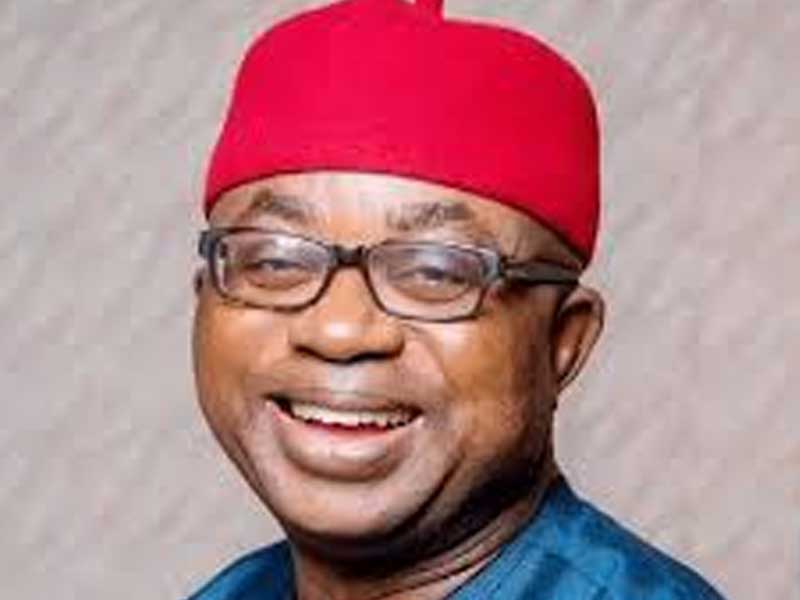
* Onuigbo, a former two-term federal lawmaker, who represents South-East geopolitical zone in the North-East Development Commission (NEDC), made this keynote presentation at the Global Igbo Foundation Initiatives’ inaugural stakeholders’ meeting held in Abuja, recently.