

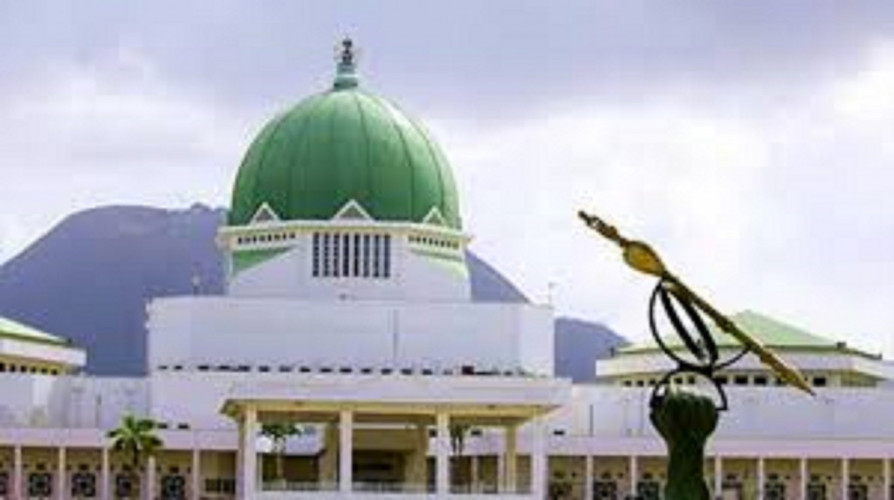
The mounting wave of insecurity across the nation received the attention of the National Assembly last week when special plenary sessions were held to debate the issue. Adedayo Akinwale reports.
The insecurity ravaging the country reached a crescendo in the past few weeks with a series of high profile kidnappings in some parts of the country. Although the issue of insecurity has been on for the past 15 years, but the recent spike has reached an alarming stage.
For instance on November 17, 2025, armed assailants stormed a girls school in Nigeria’s Kebbi State, killing two members of staff and abducting 25 students. However, one was able to escape soon after.
Similarly, on November 18, 38 worshippers were captured during a community prayer service at a Christ Apostolic Church in Eruku, Kwara state.
Also, on November 21, armed bandits abducted 303 students from a Catholic school. The Niger State chapter of the Christian Association of Nigeria (CAN) later said 50 students had escaped and reunited with their parents.
As if that was enough, on November 24, a group of 20 armed men attacked the village of Isapa in the Ekiti district of Kwara State, kidnapping a pregnant woman, ten children, and two nursing mothers.
These were a few examples of the latest high profile kidnappings in the country.
It was based on this that both chambers of the National Assembly held special plenary sessions to debate and proffer solutions where necessary that will help bring the situation under control.
In the Senate, a rowdy session broke out last Wednesday as lawmakers engaged in heated exchanges over the worsening security situation in the country, with some senators warning that the nation is “under attack” and on the brink of losing public confidence.
The debate in the chamber came just hours after the Senate adopted a separate motion commending President Bola Tinubu and security agencies for the swift rescue of dozens of abducted victims in Kwara and Niger states.
Reacting, lawmakers said the situation had reached a point that required an immediate and comprehensive federal response.
It was at this point that the Deputy Senate President, BarauJibrin, said the escalating violence had made it clear that Nigeria must seek broader support.
“We should seek assistance from overseas, urging collaboration with global partners to stem the crisis,” he said, insisting that the country could still overcome its security challenges with the right structure and support.
In his submission, Senate Leader, OpeyemiBamidele, described the current wave of attacks as a defining moment for the nation, warning that “business as usual” could lead to catastrophe.
But Senator EnyinnayaAbaribe pushed back attempts to blame previous administrations, insisting that the current government must accept responsibility for recent failings.
He cited reports that troops were withdrawn hours before the Kebbi school attack.
The ranking senator said, “Who asked them? Nobody knows. If I were the Commander-in-Chief, I would demand answers.”
The Senate President, GodswillAkpabio, also expressed concern that intelligence failures and internal sabotage were undermining security agencies, noting reports that the location of a Brigadier-General killed in Borno had been compromised.
He said it was troubling that despite security advisories issued to schools in Kebbi, bandits still struck unhindered.
Nevertheless, tension heightened when Senator Seriake Dickson warned that Nigeria was “losing prestige and integrity” due to constant attacks, accusing the majority caucus of massaging the issues rather than addressing them head-on.
His remarks triggered uproar from All Progressives Congress (APC) senators, forcing the presiding officer to cut off his microphone.
As some lawmakers reiterated claims that security agencies were aware of the locations and motives of terrorists, Akpabio cautioned against turning the crisis into a sectarian narrative.
“This is orchestrated to damage the image of democracy. There is nothing like targeting Muslims or Christians. It is an attack on all. This country is under attack,” he said.
Contributing to the debate, Senator Adams Oshiomhole rose in defence of Tinubu, arguing that the administration was doing its best under severe pressure. He demanded an investigation into the troop withdrawal in Kebbi.
Consequently, the Senate declared that all kidnapping-related offences be classified as acts of terrorism. It resolved that kidnappers should face the death penalty (maximum sentence) once the relevant law is amended, and that the courts should have no discretion to reduce the sentence or substitute with a fine.
The Red Chamber also considered a review of the country’s firearm laws to permit responsible citizens to own or bear ammunition.
The lawmakers adopted the proposal through a voice vote conducted by the Senate President, GodswillAkpabio.
The story wasn’t so different in the House of Representatives when members also debated the issue of insecurity.
House Speaker, Hon. Abbas Tajudeen had said Nigeria would not accept conclusions that do not reflect the complexities of the country’s security challenges.
Abbas while speaking at a special plenary session on national security on Tuesday said terrorism, banditry, communal clashes, and extremist violence have brought suffering to Nigerians of all faiths.
His words: “It is true that in some communities, Christians have been targeted, just as Muslim communities have suffered similar attacks in others.
Nigeria welcomes this prospect and is prepared to work transparently and responsibly with American institutions.
“Our sovereignty remains non-negotiable, yet partnership, especially when extended in good faith, can allow both countries to face shared threats with greater clarity and purpose.”
In his contribution, Minority Leader, Hon. Kingsley Chinda said as lawmakers, they must be sincere to detach from religion, party affiliation, and debate the present insecurity in Nigeria with hornest approach and commitment, so that posterity would judge them well.
Chinda admitted to various insecurity challenges which include, economic, political, religious, and warned that until real facts are laid bare and dealt with, with all sincerity as lawmakers and representatives of the people, they don’t have any business in the parliament.
Making his submission, Leader of the House, Professor Julius Ihonvbere, acknowledged the current insecurity across the country, which he also admitted impedes present developmental efforts of the current administration.
He said there must be the political will to ensure that there’s security of lives and property of Nigerians.
According to him, there are far implications on Nigeria’s insecurity which in turn spiral to other West Africa countries and the African continent.
On his part, a former Deputy Speaker, Hon. Idris Wase alleged that there were times when members of the Boko Haram insurgent and armed robbers found their way into the military during recruitment exercises.
He was of the opinion that the issue of sabotage within the security sector must be properly addressed through a comprehensive review of the recruitment of personnel into the various security services.
According to Wase: “There were moments in time when, in the process of recruitment, Boko Haram were found in the list. Other criminals, armed robbers, and gangs were found in the list of the Nigerian army and police.
“There has to be a thorough way of ensuring that when we are recruiting, those of us who are politicians are recommending people of good character and integrity. That’s the only way we can solve this problem. And I want to also allude to the fact that, maybe, bring one example.”
Heeding the call for a comprehensive approach to tackle insecurity in the country by the National Assembly, TinubulastTuesday ordered the Inspector General of Police, KayodeEgbetokun to withdraw police officers attached to VIPs. He also declared a state of emergency on security nationwide.
Surprisingly, members of the National Assembly have raised concerns about Tinubu’s directive to withdraw police personnel attached to Very Important Persons (VIPs), warning that the move could expose them to grave security risks.
Senator MagatakardaWamakko said the withdrawal of police escorts from top government officials and other VIPs was ill-timed, given the worsening security situation across the country.
According to him, public office holders remain high-value targets for terrorists, kidnappers and other criminal gangs, making the decision potentially dangerous.
“Our lives are in danger. At a time when criminals are becoming more desperate and attacks are on the rise, withdrawing police protection from senators and other VIPs exposes us to avoidable risks. This policy needs to be reviewed,” Wamakko said.
Similarly, Senator Tahir Monguno, said withdrawing police protection from public officials at a time of heightened criminal activities would put their lives at serious risk.
In his submission ,Wase also called for a review of the directive, ordering the withdrawal of police personnel from VIPs, warning that the measure could expose public officials to heightened security risks amid rising kidnapping incidents across the country.
Reacting, a civil society organisation, the Impacthive Centre for Accountability, Democracy and Rights (ICADAR) described the appeal by the members of the National Assembly to President Tinubu to reconsider his directive on the police withdrawal from VIPs as shortsighted and self-centered.
Executive Director of the group, Dr. Bello Ishaq in a statement said every Nigerian life carries equal value, adding that no Nigerian is more Nigerian than another, regardless of status, position, or influence.
It urged the government and the police to resist undue political pressure from the lawmakers saying no one is more Nigerian than the other.