Chiemelie Ezeobi
The Civil Society Legislative Advocacy Centre (CISLAC) has intensified pressure on federal lawmakers to champion stronger climate governance, fairer fiscal regimes, and an accelerated clean energy transition, as Nigeria confronts deepening environmental and economic vulnerabilities linked to fossil fuel dependence.

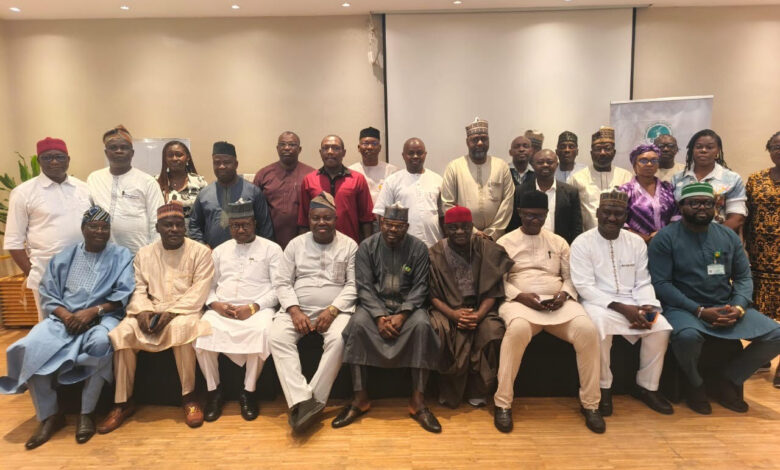
This formed the core of discussions at a landmark policy dialogue convened by CISLAC at the Sheraton Hotel, Ikeja, where legislators, civil society leaders, and policy stakeholders examined the legislative reforms needed to steer Nigeria toward renewable energy adoption, climate resilience, and equitable economic growth.
Speaking on behalf of the Speaker of the House of Representatives, Rt. Hon. Tajudeen Abbas, Hon. Akin Rotimi said the engagement was “timely and strategic,” aligning with the National Assembly’s Legislative Agenda (2023–2027).
He highlighted ongoing priorities, including strengthening NESREA, enforcing the Climate Change Act, fast-tracking renewable energy deployment, reducing gas flaring, and restoring polluted communities.
Rotimi stressed Parliament’s responsibility in shaping fiscal incentives that encourage the transition without undermining livelihoods. “The transition must empower, not exclude. We must protect workers who depend on traditional energy value chains,” he said.
CISLAC’s Executive Director, Auwal Ibrahim Musa (Rafsanjani), who set the tone for the dialogue, said the conversation was rooted in climate responsibility, resource governance, and Africa’s evolving energy landscape. He acknowledged lawmakers, committee chairpersons, clerks, APNIFFT leadership, civil society organisations, and the media.
Rafsanjani warned that Nigeria’s long-standing reliance on fossil fuels is increasingly untenable, given mounting climate threats and global momentum toward decarbonisation. “This conversation could not be more timely. Nigeria stands between its long-standing dependence on fossil fuels and the imperative to pursue a cleaner, more resilient, and economically inclusive future.”
He emphasised the centrality of the Nigeria Energy Transition Plan (ETP), which targets net-zero emissions by 2060, but noted that its success depends on strong fiscal reforms, transparent taxation systems, and incentivised capital inflows into renewable and transition fuels.
Despite being Africa’s largest economy, he observed that Nigeria remains energy-insecure, with renewable penetration still below 10 per cent, leaving millions exposed to electricity shortages, pollution, and environmental risks.
Rafsanjani applauded progress made through the Climate Change Act of 2021, which established the National Council on Climate Change and mandated a Climate Action Plan, but insisted that real change depends on implementation.
“The Legislature has gone beyond establishing the frameworks, it must ensure effective implementation, transparency, accountability, and mobilize climate financing.”
He criticised fiscal regimes that offer tax holidays to fossil fuel enterprises, warning that such incentives often work against public interest.
He urged lawmakers to redirect fiscal instruments to decarbonisation pathways that drive divestment from high-emission assets; expand access to transition fuels such as natural gas; stimulate investment in solar, wind, hydrogen and other clean technologies; safeguard national revenue; and ensure equitable transition outcomes for disadvantaged communities.
In a notable intervention, Rafsanjani flagged intra-African mobility barriers as a major impediment to regional climate progress. He cited repeated visa challenges faced by researchers, activists, and innovators attending African climate summits.
“Energy transition is not only a technical matter, it is a question of access, mobility, and African solidarity. When African citizens cannot travel to African countries, we weaken the momentum of regional cooperation.” He urged parliamentarians to push for continental mobility reforms necessary for a just transition.
Hon. Oluwole Oke warned that international developments suggest a global slide back into fossil dependence, citing the United States’ repeated exit from the Paris Agreement, Canada’s renewed oil projects, Europe’s coal resurgence following the Russia–Ukraine conflict, and Nigeria’s increasing coal extraction in Okaba, Kogi State.
“We must decide where we stand as a Parliament and as a people. We must preserve the planet, there is no other home,” he said.
From a public health standpoint, Hon. Fataba Olusola Steve linked fossil taxation to environmental and medical justice, noting that emissions from fossil fuels fuel asthma, respiratory infections, cardiovascular diseases, and contaminate soil and water in mining communities.
“As we transition to low-carbon fuels, fiscal policy must protect the health of Nigerians, especially vulnerable groups,” he said.
Delivering a goodwill message, Hon. Kalejaiye Paul PhD praised Lagos State as a symbol of resilience and innovation. “Lagos is not just a city; it is a vision built on innovation, opportunity, and the dreams of millions. From our marketplaces to our world-class infrastructure, Lagos continues to define development across the nation.”
He commended the State Governor for expanding infrastructure, improving mobility and security, empowering youth and women, and strengthening inclusive governance.
“Under his stewardship, Lagos has become a place where dreams are not only nurtured but realised. With unity, resilience, and visionary leadership, we will continue shaping a Lagos that shines as a beacon of excellence across Nigeria and Africa.”
Rafsanjani closed the dialogue with a call for stronger legislative oversight, appreciation for partners such as Tax Justice Network Africa (TJNA), and a renewed push for accountable climate governance.
He encouraged lawmakers to demand transparency in incentive administration, conduct evidence-based oversight on tax exemptions, champion continent-wide mobility reforms, and safeguard Nigeria’s long-term prosperity through a just transition.