*Receives C of O for 100,000 hectares of land from Niger
Ndubuisi Francis in Abuja

The federal government has declared that mass housing, food security, inclusive growth, and poverty alleviation, among others remain national priorities, noting that the newly-introduced Sustainable Integrated Productive Communities (SIPC) programme aligns with President Bola Tinubu’s Eight-Point Agenda.
The SIPC, which was formally launched on January 9, 2026, with Niger State as the pilot phase, and spearheaded by the Ministry of Finance Incorporated (MOFI) in partnership with the Rural Electrification Agency (REA) and Family Homes Fund, aims to tackle food insecurity, unemployment, rural-urban migration, and housing deficit by transforming abandoned rural lands into productive, self-sustaining communities.
The Minister of State for Finance, Dr. Doris Uzoka-Anite who spoke in Abuja while receiving the Certificate of Occupancy (C of O) for 100,000 hectares of land donated by the Niger State Government to jump-start the pilot phase of the SIPC programme, applauded its conception by the federal government, and Niger State for brazing the trail.
The minister stated that the presentation of the Cof O was more than a formal exchange of documents, adding that it was the demonstration of a resolve to give practical solution to national challenges.
According to her, SIPC touches on so many fabrics of the eight priority areas, and the Renewed Hope Agenda of the Tinubu administration, ranging from food security, mass housing, inclusive economic growth, poverty alleviation, youth empowerment, renewable energy, energy sustainability, and security, among others.
She said the programme would address several social and economic challenges confronting the country.
Accordingto the minister, “We are here to show that when the federal government and state governments come together, action happens.
“This partnership is about moving from policy to tangible outcomes that will directly improve the lives of Nigerians,” she said, adding that the programme was designed to ensure that Nigerians did not have to choose between where to live and where to work.”
Noting that the the pilot scheme in Niger State would translate national priorities into bankable projects capable of attracting long-term private sector investment, Uzoka-Anite said that the ministry was focused on structuring initiatives that de-risk private participation and guarantee value for money.
“The success of this programme will not be measured by documents exchanged, but by the homes built, farms cultivated, jobs created and communities transformed.
“This is a partnership that demonstrates that when the Federal Government and state governments come together, action does really happen.
“And this is where we begin to translate national priorities into concrete bankable projects that can make the right sort of impact on the lives of every Nigerian,” Uzoka-Anite said.
The minister explained that the project managers had been mandated to commence work immediately, with plans to begin farming alongside housing construction
The relevant agencies, she said, would provide power and other basic infrastructure to support the communities.
She commended the governor for his leadership and persistence, describing him as a committed partner who understands the impact of the programme on the lives of citizens.
The presentation of the C of O to the federal government came only 13 days after the signing of a landmark Memorandum of Understanding (MoU) between the federal government and Niger State to kickstart the SIPC which integrates a mass housing, agriculture, renewable energy and enterprise development into a single, scalable framework for inclusive growth.
The MoU was signed at the Federal Ministry of Finance, Abuja, with the mnistry serving as the anchor institution, and MOFI providing strategic asset optimisation and private capital mobilisation support.
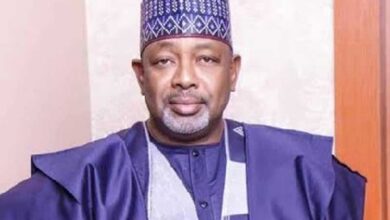
In his address before presenting the C of O to the minister in Abuja, Thursday, Governor Mohammed Umaru Bago, said the project would change the face of agriculture in Nigeria, adding that it will drive Nigeria’s industrialisation.
Bago said that SIPC aligned perfectly with the state’s development vision anchored on agriculture, industrialisation and sustainable livelihoods.
He disclosed that the state provided 1000,000 hectares of land across several locations in the state for the pilot phase, with an additional 500,000 hectares reserved across local government areas for future investors under the programme.
He stated that the state had also invested heavily in mechanisation, pledging to deploy tractors and harvesters across local governments to support production and ensure early results.
“This project will revolutionise agriculture, housing, livestock and industrialisation.
“Land is not a problem in Niger, and we are ready for investors,” he said.
The governor said that the initiative would help address insecurity by reducing ungoverned spaces through organised communities, job creation and sustainable livelihoods.
According to him, the SIPC would also benefit from irrigation, renewable energy and support from development finance institutions.
Earlier in his opening remarks, the Managing Director of MOFI, Dr. Armstrong Takang, said the SIPC initiative will immensely benefit Nigerians especially those in rural communities.
Takang said: “Despite the fact that we have all of these resources, we can’t see what impact we’re getting. Despite all these initiatives, a lot of people in the rural communities are not benefiting from it.
“Why don’t we create a program that allows us to convert those desolate, unproductive pieces of land and assets into productive communities, where they have a source of livelihood.
“They too can also get into the Nigerian dream, and the renewable agenda of Mr. President. They can own homes, they can afford to pay for those homes, through the activities in those communities, especially farming, whether it is crop production or livestock.
“They can send their children to school, they can live in safe communities because there is security there.
“They can have access to safe and high quality water, because we have water provision. They can have access to power, like everybody else in the city. And as a result, there will be no need for people to all be fighting to go to Abuja, to go to Lagos, to go to Kano.
“They can have a decent life in their villages, in their local government, and the minister challenged us to engage with the governors and say which are the actual governors that we can work with.”