


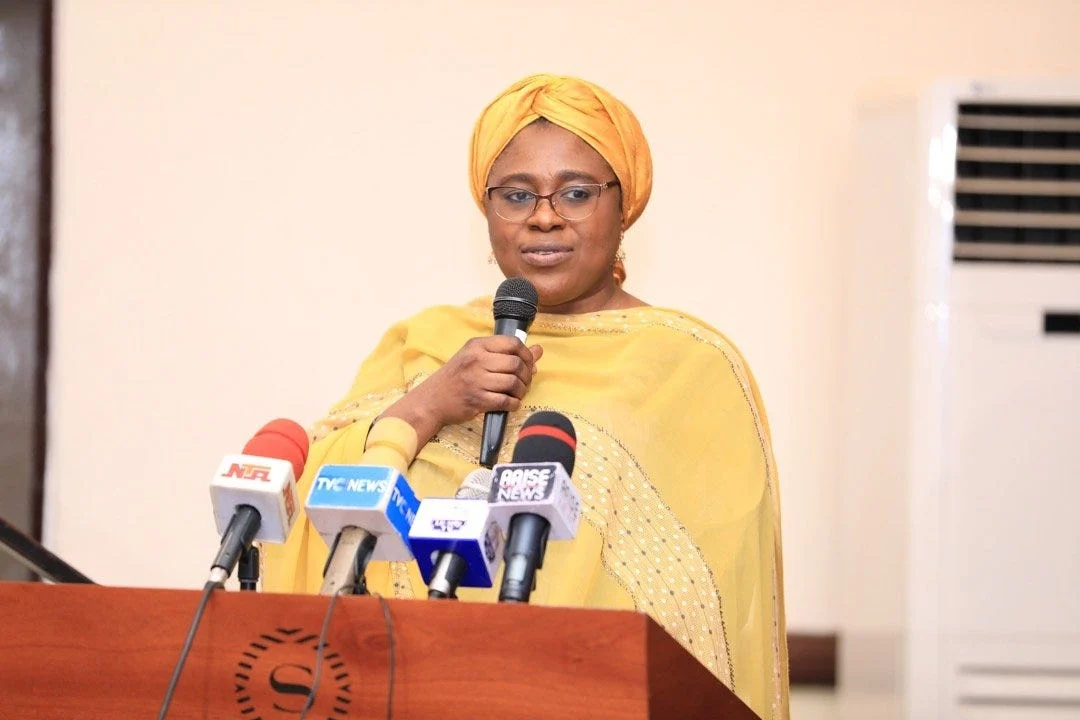

The Special Adviser to the President on Health, Dr Salma Anas, has warned that Nigeria can no longer rely on “external benevolence” in building its healthcare system.
Anas made this submission on Friday in Abuja at the 9th Annual Health Conference of the Association of Nigerian Health Journalists (ANHeJ).
The theme of the conference was “Domestic Resource Mobilisation in the Face of Dwindling Foreign Grants and Aid.”
According to her, donor fatigue is real, and Nigeria will inevitably graduate from multiple aid programmes.
She said that the health and prosperity of the nation must no longer depend on foreign grants but on strong domestic ownership and accountability.
“Nigeria’s health system is at a critical crossroads as foreign aid to the country declines by an estimated 15 per cent to 20 per cent, prompting urgent calls for domestic financing to sustain essential health services.”
She said that donor funds currently support critical programmes in HIV, Tuberculosis, Malaria, Immunisation, and Primary Healthcare Centre (PHC).
According to her, a decline in funding can lead to stock-outs, service disruptions, and catastrophic outcomes for Nigeria’s poorest citizens.
“The moment funding slows, lifesaving services break down, and vulnerable communities suffer immediate consequences.”
Anas lauded President Bola Tinubu’s Renewed Hope Agenda, particularly the Nigeria Health Sector Renewal Investment Initiative (NHSRII), as a proactive strategy to strengthen PHC.
She said it would also improve governance, boost local production of medical commodities, and enhance health security.
“Central to this plan is the expansion of the Basic Health Care Provision Fund (BHCPF) from one per cent to two per cent of the Consolidated Revenue Fund.
“The expansions will instantly double the fiscal space for health for Nigeria’s poorest citizens.
“The BHCPF 2.0 reforms also emphasise digital accountability and performance-based payments to health facilities.”
She said that additional financing reforms included expanding mandatory health insurance under the National Health Insurance Authority (NHIA) to cover 50 million more Nigerians.
“The reforms also include advocating for increased and earmarked Sugar-Sweetened Beverage (SSB) taxes to finance prevention and treatment of non-communicable diseases and boosting local production of medicines and vaccines to reduce medical import bills and curb losses from medical tourism.”
Anas urged governors to increase their commitment to health financing, reminding them that PHC was primarily delivered at the state and local government levels.
“States must go beyond BHCPF and meet the Abuja Declaration target of allocating 15 per cent of annual budgets to health,” she said.
Also, Ms Grace Ike, the Chairman of the Nigeria Union of Journalists (NUJ), FCT Council, called for urgent domestic financing.
Ike, represented by the Secretary of Council, Mr Jide Oyekunle, said Nigeria could no longer rely on dwindling foreign grants to protect its citizens’ lives.
According to her, Nigeria’s health future cannot depend on forces outside its control.
“We must build a resilient, equitable, and self-sustaining health system funded by Nigerians and designed for Nigerians,” Ike said.
Ike urged health journalists to act as “custodians of accountability” by monitoring the utilisation of funds, educating citizens on the importance of domestic financing, tracking government commitments, and highlighting communities affected by funding gaps.
According to her, a well-informed public and an accountable government begin with responsible journalism.
In a health-related development, PUNCH Online reported that the Federal Ministry of Health says the health sector is experiencing unprecedented momentum.
This momentum, it says, is driven by a series of major developments strengthening Nigeria’s healthcare system, spanning international partnerships, technological innovations, and critical private-sector support.
NAN