

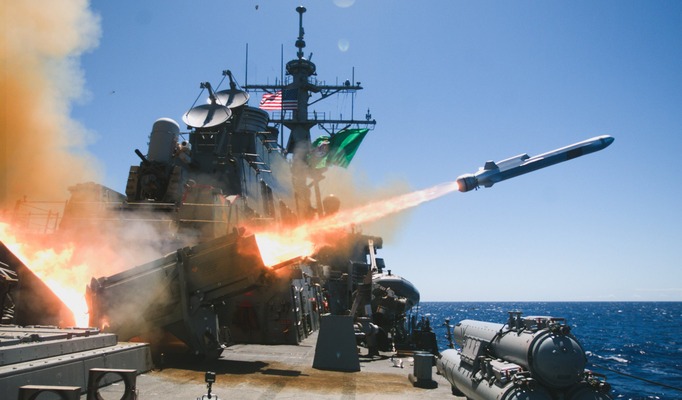
The recent counter-terrorism strike in Sokoto marks a turning point in Nigeria’s long struggle against terrorists and jihadist violence and security calculus. Enabled by foreign cooperation, it underscores both renewed state resolve and a shifting approach to intelligence, sovereignty, and security partnerships at a critical moment. Adedayo Adejobi writes.
Reports of a coordinated counter-terrorism operation involving Nigeria and the United States, driven by actionable intelligence and executed in Sokoto, have introduced a new and consequential chapter in the long war against jihadist violence in Nigeria and the wider Sahel.
Whether viewed as a tactical strike or a strategic signal, the operation has resonance far beyond the immediate battlefield. It speaks to political will, evolving alliances, contested sovereignty, and the uncomfortable recalibration of Nigeria’s security doctrine in an era where terror networks are transnational, adaptive, and deeply entrenched.
Sokoto occupies a unique symbolic and historical space in Nigeria’s security imagination. As the heartland of the old Islamic caliphate, it represents continuity, authority, and religious legitimacy.
For terror groups that thrive on myth-making and ideological inheritance, geography matters. An operation in this space is therefore not just kinetic, it is psychological. It signals that no terrain is too sensitive, no symbolism too sacred, when the survival of the Nigerian state is at stake.
Politically, the most striking element of the episode is the assertion of will. Successive Nigerian administrations have often been accused of rhetorical toughness paired with operational hesitation. In this case, the decision to act decisively, reportedly in alignment with firm pressure and expectations from Washington under President Donald Trump’s hard line posture on terrorism, reflects a shift from caution to confrontation. Trump’s worldview leaves little room for ambiguity, allies are expected to act, not equivocate. Nigeria’s response suggests a leadership increasingly aware that delay and half measures only embolden violent non-state actors.
Yet political will does not exist in a vacuum. It is inseparable from political cost. Domestic sensitivities around foreign involvement in security operations are real and historically grounded. Nigeria’s memory of external interference, from colonial conquest to Cold War maneuvering, has made sovereignty a deeply emotive concept. Reliance on United States intelligence, no matter how precise or timely, inevitably raises questions.
Who defines the target? Who controls the narrative? Who bears responsibility for unintended consequences?
Critics argue that over dependence on foreign intelligence risks hollowing out Nigeria’s own capacity. This concern deserves serious engagement.
Intelligence is not merely data, it is context, culture, language, and long term presence.
A nation that outsources too much of this function risks strategic blindness. At the same time, absolutist notions of intelligence sovereignty are increasingly obsolete.
Terror networks share resources, move across borders, and exploit digital platforms that no single state can fully monitor. The real issue is not cooperation, but balance. Nigeria must ensure that intelligence partnerships are reciprocal, capacity building, and anchored in Nigerian command authority.
The economic dimension further complicates the narrative. Observers who allude to America’s interest in Nigeria’s mineral resources are not speaking in a vacuum. The Sahel and West Africa are emerging theaters of strategic competition, with critical minerals, energy corridors, and trade routes at stake.
Security cooperation is never purely altruistic. However, acknowledging interest does not automatically invalidate partnership. The question is whether Nigeria negotiates from a position of clarity and strength, or from desperation. Counterterrorism can coexist with economic self interest, provided Nigerian institutions are robust enough to protect national priorities.
Militarily, the operation challenges long standing perceptions of compromise and fatigue within Nigeria’s armed forces. Years of asymmetric warfare have taken a toll on morale and public confidence.
Accusations of infiltration, collusion, or incompetence have followed the military, sometimes fairly, sometimes opportunistically. A successful, intelligence led operation sends a counter-message.
It suggests adaptability, learning, and renewed seriousness.
The Nigerian Navy and other services, often peripheral in counterinsurgency discussions, are also implicated in this moment. Terror financing, arms smuggling, and logistics increasingly move through maritime and riverine routes. A stepped up, professional, and transparent military response across all services is no longer optional.
Intelligence, however, remains the quiet centre of gravity. The language of actionable intelligence implies specificity, timing, and trust. It also implies risk. Acting on shared intelligence binds partners together in success and in failure.
For Nigeria, the future of this alliance will depend on how effectively it translates external inputs into internal competence. Training, technology transfer, and doctrinal reform must follow operations, not trail them.
The operation also reopens a contentious internal debate about dissent, criticism, and responsibility in wartime.
Public intellectuals and clerics such as Sheikh Gumi and Ahmed Baba Ahmed, among others, have positioned themselves as vocal critics of the federal government’s counter-terrorism approach.
In a healthy democracy, dissent is not only permitted, it is necessary. However, in a context as fragile as Nigeria’s security environment, rhetoric has consequences. Language that consistently delegitimises state action, rationalises extremist grievances, or frames terror groups as misunderstood actors demands scrutiny.
This is not a call for persecution or silencing. It is a call for accountability and transparency. The Nigerian and international community are entitled to ask hard questions about funding networks, ideological affiliations, and cross border linkages that sustain extremist violence.
Background checks, financial transparency, and open debate should not be taboo. They are tools of democratic self defense. To ask questions is not to accuse, but to protect.
Regionally, the implications are profound. West Africa’s terror ecosystem is interconnected. Signals sent in Sokoto are received in Mali, Niger, Burkina Faso, and beyond. A Nigeria that demonstrates resolve alters calculations across the region. It reassures partners and unsettles adversaries. It also places weight on Nigeria’s shoulders. Leadership brings expectation. Consistency will matter more than spectacle.
Ultimately, this moment is a test. A test of whether Nigeria can convert a tactical success into a strategic doctrine. A test of whether alliances can be managed without eroding sovereignty. A test of whether political will can be sustained beyond headlines. Terrorism thrives on doubt, delay, and division. The strongest signal Nigeria can send is not just force, but coherence.
History will not remember intelligence briefs or diplomatic communiques. It will remember whether the Nigerian state chose clarity over comfort, responsibility over rhetoric, and action over paralysis. In Sokoto, a message was sent. What follows will determine whether it becomes a turning point or just another echo in a long war.