


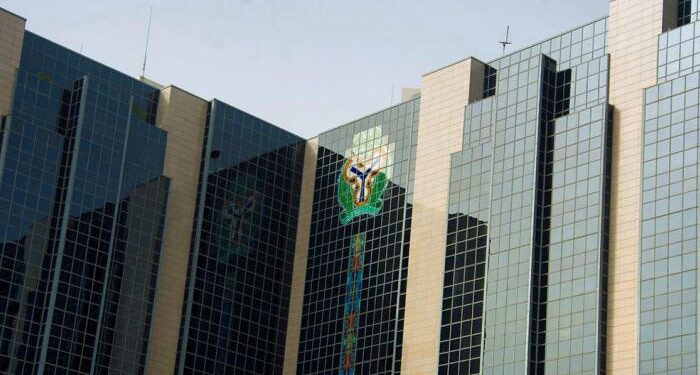

The Central Bank of Nigeria has projected that the Nigerian capital market will remain bullish in 2026, driven largely by the ongoing bank recapitalisation exercise, rising investor confidence and supportive policy measures.
This outlook is contained in the CBN’s “Macroeconomic Outlook for Nigeria, 2026: Consolidating Macroeconomic Stability Amid Global Uncertainty”, recently released by the apex bank.
According to the report, the recapitalisation of banks is expected to strengthen balance sheets, enhance financial stability and deepen market activity, thereby supporting sustained growth in the capital market.
“The capital market is expected to remain bullish in 2026, supported by the bank recapitalisation exercise, rising investor confidence and other policy measures aimed at fostering growth,” the CBN stated.
The apex bank projected that Nigeria’s economy would continue its expansion trajectory in 2026, with growth estimated at 4.49 per cent, up from 3.89 per cent in 2025, anchored on broad-based structural reforms and a gradually easing monetary policy stance.
The CBN also forecast a moderation in headline inflation to an average of 12.94 per cent in 2026, driven by declining food prices and lower premium motor spirit costs, following improvements in domestic refining capacity and supply conditions.
In the financial sector, the bank noted that while monetary aggregates slowed in 2025 due to tight monetary conditions, a calibrated policy easing and prudential measures would support credit discipline and financial stability in 2026. The recapitalisation programme is also expected to enhance banks’ capacity to support private-sector-led growth.
On the external front, the CBN projected sustained improvement, with external reserves expected to rise to $51.04bn in 2026, supported by stronger exports, steady remittance inflows and increased oil and gas output. The current account surplus is forecast to grow to $18.81bn.
However, the apex bank cautioned that the outlook remains subject to risks, including potential inflationary pressures, global financial market volatility, geopolitical tensions and possible disruptions to crude oil production.
Despite these risks, the CBN reaffirmed its commitment to balancing price stability with output growth, noting that appropriate policy tools would be deployed to attract foreign investment, sustain exchange rate stability and strengthen confidence in Nigeria’s financial markets.