

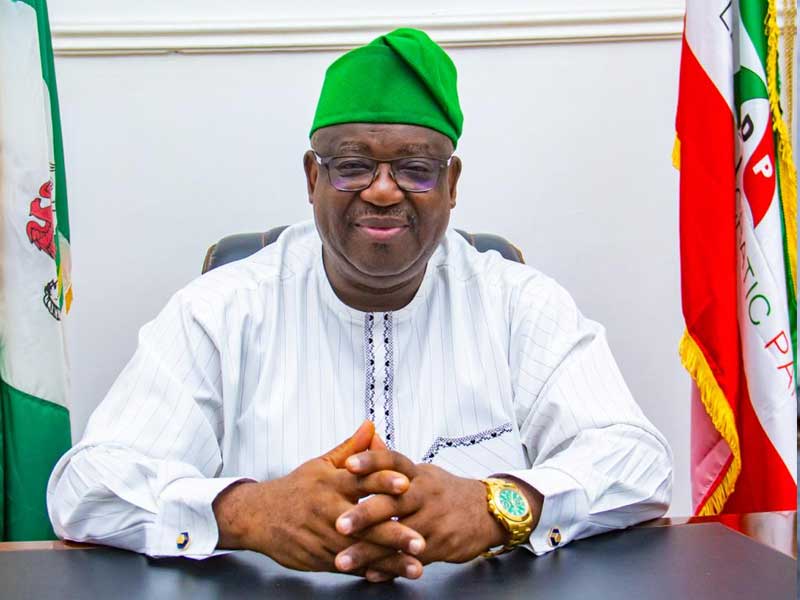
Yemi Kosoko writes about how Governor Caleb Mutfwang’s recent defection from the People’s Democratic Party to the All Progressives Congress could redefine political cooperation and competition in Plateau State.
Governor Caleb Mutfwang’s dramatic defection from the Peoples Democratic Party (PDP) to the All Progressives Congress (APC) marks one of the most consequential political realignments in Plateau State since the commencement of the Fourth Republic in May, 1999. Far beyond a routine party switch, the move reshapes Plateau’s internal power blocs, reconfigures its relationship with the federal government, and signals a broader national trend of PDP fragmentation.
Mutfwang’s exit from the PDP did not occur in a vacuum. According to reports, the governor cited “prayer, consultation, and deep reflection” before formally joining the APC. His decision followed months of internal PDP instability, legal battles, and factional disputes that weakened the party’s cohesion on the Plateau and nationally.
The APC, for its part, framed the defection as “calculative, measured, and popular,” arguing that Mutfwang and the leaders who moved with him “controlled more than 90% of the PDP followership” in the state. This suggests that the governor’s move was not merely personal but part of a coordinated political migration.
Plateau’s longstanding political fragmentation historically, has been a battleground of shifting alliances, personality-driven politics, and ethno-religious undercurrents. Since 2015, the state has oscillated between the APC and PDP, with each administration inheriting deep-seated divisions.
Mutfwang himself acknowledged this fractured landscape, saying he defected to help “unify the state’s political class” and heal longstanding acrimony between rival camps. His public reconciliation with former Governor Simon Lalong—once a fierce opponent—symbolized a new elite consensus that could reshape Plateau’s political future.
What is observed as the Federal factor in the defection saga is both strategic alignment and political survival. A central theme in the governor’s defection is alignment with the federal government. His advisers described the APC as the “safest option” amid PDP instability and emphasized the benefits of working closely with the presidency on security and development issues.
Mutfwang himself pledged loyalty to President Bola Tinubu, arguing that Plateau’s voice would be “stronger from the inside” of the ruling party. In a state grappling with recurring violence, federal alignment is often seen as a pragmatic necessity.
The PDP in Plateau State expressed its outrage and the question of mandate in a reaction that was swift and scathing. The party accused Mutfwang of “betrayal of public trust” and “political opportunism,” arguing that he defected without consulting party structures and should constitutionally vacate his office.
This raises a broader national debate on whether elected officials should retain their mandates after switching parties. Considering that Nigerian courts have historically allowed governors to defect, the moral and democratic implications remain contested.
The implications for Plateau’s 2027 Elections is obvious when Mutfwang predicted that Plateau could deliver “one million votes” for the APC in 2027—a bold claim, but not impossible if the current realignment holds. With senators, local government chairmen, and key PDP figures defecting alongside him, the APC now enjoys unprecedented consolidation in the state.
However, Plateau’s electorate is unpredictable. Voters have repeatedly punished incumbents and shifted loyalties based on performance, identity politics, and security concerns.
Mutfwang’s defection is part of a broader wave of PDP governors crossing over to the APC, deepening the opposition party’s crisis and strengthening the ruling party’s grip on the North Central region.
If the trend continues, the PDP risks losing its historical foothold in the Middle Belt—once a stronghold of anti-establishment sentiment and minority political assertion.
Governor Mutfwang’s defection is not merely a political manoeuvre; it is a recalibration of Plateau’s power structure, a strategic alignment with federal authority, and a reflection of the PDP’s deepening internal fractures.
Whether it leads to genuine unity or simply a new configuration of old rivalries will shape Plateau’s political trajectory for years to come.