

* Lauds Hadiza’s contributions to public service, nation building at 50th birthday colloquium
Deji Elumoye and Sunday Aborisade in Abuja
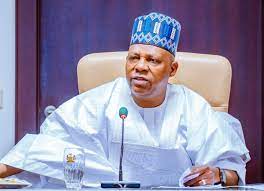
Vice-President Kashim Shettima Tuesday charged Nigerian public servants to embrace selflessness, discipline and excellence as the surest path to building enduring legacies in governance, stressing that true service requires sacrifice, consistency and strength of character.
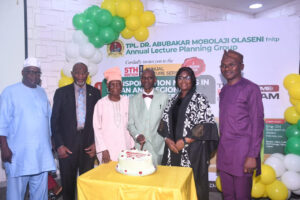
Shettima spoke in Abuja at a governance colloquium organised to mark the 50th birthday of the Special Adviser to the President on Policy and Coordination and Head of the Central Delivery Coordination Unit (CDCU), Hajiya Hadiza Bala Usman.
According to the vice-president, the most enduring legacies in public service are those built through resilience, quiet dedication and an unwavering commitment to excellence, rather than the pursuit of applause or spectacle.
“If we are to raise more generations of Nigerians ready to lead with purpose, to deliver with excellence and to serve with courage, we must remember this truth: intention without the willingness to pay the price of service remains wishful thinking,” Shettima said.
Eulogising Hadiza Bala Usman, Shettima described her as a symbol of possibility, not only for young women from northern Nigeria but for the nation at large.
He said her influence in public service was earned through deliberate choices, institutional strengthening and the disciplined carrying of responsibility.
“There is no doubt that Hadiza’s place in our public service history is secure. It was not built on spectacle, nor did it rely on applause. What she has become is the product of decisions taken quietly, responsibilities carried fully and institutions strengthened with care,” he stated.
The vice-president noted that Hadiza’s rise in public service was neither accidental nor incidental, but sustained by courage and fidelity to the demanding work of nation building.
He added that her journey provided proof to young women still searching for validation that ambition and excellence are permitted.
“What has not been noted enough is that she emerged from a part of the country where many young women still search for proof that ambition such as hers is allowed. Her journey required courage, and that is why she has become that proof,” Shettima said.
He prayed that her example would continue to inspire Nigerians who believe that service, when done well, can ennoble a nation.
In his remarks, the Secretary to the Government of the Federation (SGF), Senator George Akume, also paid glowing tribute to the celebrant, describing her 50th birthday as a milestone celebrating a life of purpose, sacrifice and commitment to good governance.
Akume said Hadiza’s career reflected dedication, discipline, courage and patriotic zeal, adding that her leadership at the CDCU had strengthened governance delivery, improved inter-ministerial coordination and reinforced a culture of accountability and results in line with President Bola Tinubu’s Renewed Hope Agenda.
“As Special Adviser to the President on Policy Coordination and Head of the Central Results Delivery Coordination Unit, you have distinguished yourself through intellectual rigour, strategic foresight and uncommon passion for translating policy intent into measurable outcomes,” the SGF said.
In an emotional response, Usman expressed gratitude to the vice-president, senior government officials, family, friends and colleagues, describing herself as deeply humbled by the honour.
She said she never desired public attention and was initially reluctant about the colloquium, but was moved by the show of support across generations and sectors.
She said: “I am truly humbled today. I don’t like celebrating myself, but listening to all that has been said has touched me deeply.
“I am grateful to my family, friends, colleagues and the many young people who look up to me.”
She recalled the influence of her late father and the support she received throughout her career.
The colloquium also featured a panel discussion on governance, reforms and service delivery.
Speaking on the panel, Deputy Governor, Economic Policy Directorate of the Central Bank of Nigeria (CBN), Dr. Muhammad Sani Abdullahi (Dattijo), said the reforms implemented in the last two years were the deepest and most far-reaching in decades, tackling structural issues that had constrained Nigeria’s growth.
He said the removal of foreign exchange and fuel subsidies, though painful in the short term, had begun to yield macroeconomic improvements, including balance of payments and current account surpluses, as well as growing external reserves.
According to him, reforms often fail not due to weak intentions but because of poor coordination and the inability to translate vision into durable institutions capable of withstanding political cycles and public anxiety.
Also speaking, the Chairman of the Presidential Committee on Fiscal Policy and Tax Reforms, Mr. Taiwo Oyedele, disclosed that he had received death threats over the ongoing tax reform process, underscoring the risks associated with structural reforms in Nigeria.
Oyedele said tax reforms were particularly difficult because they touched vested interests, compounded by low trust in government, weak tax culture and limited visibility of fiscal exchange.
“Reforms are hard, and tax reforms are even harder. You need courage. I receive threats simply for trying to fix a broken system,” he said, adding that Nigeria’s tax revenues remained abysmally low compared to peer countries, making reforms inevitable.
He urged Nigerians who understood and supported reforms to speak up, warning that silence allowed negative narratives to dominate public discourse.
The keynote address was delivered by former Director-General of the Bureau of Public Service Reforms, Dr. Joe Abah, who emphasised institutional integrity, transparency and process reforms as essential pillars for sustainable governance.
The event underscored a central message echoed by speakers: that enduring legacies in public service are built through courage, selflessness and the painstaking work of strengthening institutions for the long-term good of the nation.