

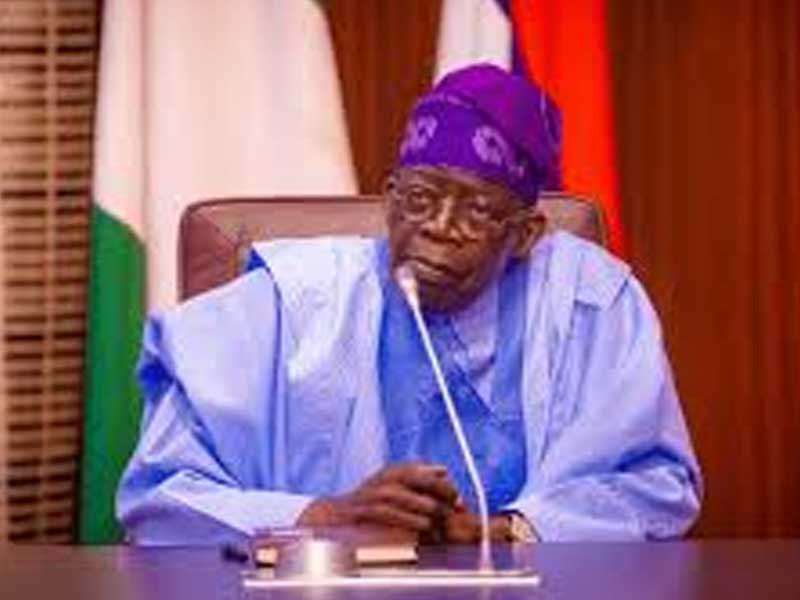
President Bola Tinubu has said the National Economic Council (NEC) remains a cornerstone of fiscal federalism and economic governance in the country.
The president said this on Monday at the second edition of NEC conference themed, ‘Delivering Inclusive Growth and Sustainable National Development: the Renewed National Development Plan 2026–2030’, held at the State House Conference Hall, Abuja.
Tinubu said the theme of the conference speaks directly to the national aspiration and resolved to move from recovery to transformation and from narrow growth to inclusivity, resilience and sustainability.
He stated that Nigeria stood at a defining cross roads, adding: ”We faced inherent structural challenges including microeconomic imbalances, infrastructure deficit, unemployment, poverty, climate vulnerabilities and limited physical space.
”Yet our people possess the resilience, creativity and determination to overcome this realities.
”Since the inception of this administration, we have undertaken bold and necessary reforms to stabilize the economy, restore confidence and lay foundation for long term growth.
”These reforms are instrument for delivering prosperity, dignity and opportunity to all Nigerians.”
The president said that the monetary policy embarked upon by his administration had yielded positive result and is being recognised around the world.
Tinubu added that his administration had recorded notable achievements that reflect its commitment to cooperative federalism and inclusive development.
”States and local governments now receive increased and more predictable federal allocations, improving their capacities to pay salaries, invest in infrastructure and deliver social services.
”We have strengthened macroeconomic stability through improved revenue performance, stronger public financial management, and enhanced fiscal coordination.
”We have prioritised infrastructure development across transportation, power, digital connectivity, housing and irrigation as a catalyst for inclusive growth.
”We have expanded social investment and human capital programmes targeting vulnerable households, youth, women and small businesses,” Tinubu said.
He said that the renewed national development plan prioritises economic diversification and productivity, human capital development, sub-national competitiveness based on comparative advantage, private sector–led growth and climate resilience.
”Its success will depend largely on effective implementation at the state and local government levels, making NEC central to aligning national priorities with sub-national realities,” he said.
The president said that the conference had reinforced collaboration, shared accountability, and a focus on practical solutions and measurable outcomes.
Tinubu said: ”We must move decisively from declarations to implementation through data-driven decision-making, peer learning among states, and innovative financing models.
”Nigeria’s diversity is our strength. When every state grows, Nigeria grows. When growth reaches the poorest households, national stability is strengthened. When development is sustainable, our children inherit hope.
”The task before us is demanding, but the opportunity is historic. The Renewed Hope Agenda is a national compact — a promise that the sacrifices of Nigerians will lead to a stronger, fairer and more prosperous nation.“
Vice-President Kashim Shettima said that NEC was the forum that gives each constituent unit of the federation a voice in shaping the country’s economic destiny.
Shettima, who is the Chairman of NEC, added that the council was the mirror that reflected national realities and the catalyst that propels action.
He said, “We are gathered here because we understand, perhaps more than anyone else, the consequences of failure, not in theory, but in the life experience across our states and communities.
”This conference, therefore, is a continuation of our covenant with the Nigerian people, a moment to take stock of the task ahead.
”And a demonstration of the harmonious relationship, Tinubu has shared with this council through these memorable years of inevitable and transformative reforms, and researching the foundations of our economy.“
Shettima said Tinubu had honoured his promise to insulate the Nigerian economy in a world increasingly shaped by geopolitical tensions and rising economic protectionism.
According to the vice-president, “The inclusive growth on our radar is not an exercise in sloganeering, we have confronted the macroeconomic obstacles before us.
”What remains is to ensure that progress filters down to the everyday lives of our people.
”This is precisely why the National Economic Council remains the most suitable vehicle for delivering the promise of inclusive growth.
”Our mission is incomplete if a child born in Lafia does not have the same chance of thrive as one born in Lagos; if the farmer in Makurdi, the entrepreneur in Aba and the student in Sokoto cannot all find dignity, opportunity and hope within the Nigerian dream.”
The Chairman, Nigeria Governor’s Forum, Governor AbdulRahman AbdulRazaq of Kwara State, said intergovernmental coordination was a decisive variable for inclusive growth.
Represented by Governor Dapo Abiodun of Ogun State, AbdulRazaq added that federal policy required states-level execution and states’ initiatives require national coherence.
”And both depend on credible partnerships with the private sector and our development partners.
“Sustained national prosperity will not be achieved through centralisation or fragmentation but through corporative, shared responsibility and discipline implementation,” he said. (NAN)