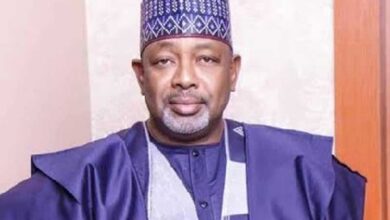

The Federal Government has declared an end to corruption and impunity in Nigeria’s tertiary institutions, warning that transparency, accountability and ethical leadership will now be strictly enforced across the sector.
The Minister of Education, Dr Maruf Alausa, made this known on Wednesday in Abuja while delivering an address at a retreat organised by the Conference of Heads of Polytechnics, Colleges of Education and similar institutions for council chairmen, commissioners of education, rectors, registrars and bursars.
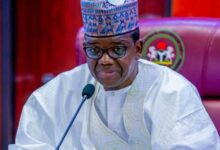

Speaking on the theme, “Transforming Polytechnic Education in Nigeria: Innovation, Good Governance and Sustainability for National Development,” Alausa said the government would no longer tolerate financial recklessness, abuse of office or unethical practices in tertiary institutions.
“The era of impunity in our institutions is over. We demand fiscal discipline, timely audits and zero tolerance for corruption in order to build public trust and attract investment,” the minister said.
He charged governing councils and management teams to uphold transparency, accountability and ethical leadership, urging them to avoid conflicts of interest, ensure prudent management of resources and prioritise merit in appointments and promotions.
Beyond governance reforms, the minister called for a comprehensive transformation of polytechnic education, stressing innovation and sustainability as key drivers of national development.
“Polytechnics are not mere institutions; they are the crucibles where innovation meets practicality, where skills forge economic resilience, and where sustainable development becomes a lived reality for our nation,” he said.
Alausa said the Federal Ministry of Education was revitalising technical and vocational education and training to ensure that graduates were equipped with practical, industry-ready skills.
“We have adopted a policy that ensures our polytechnic graduates are industry-ready, innovative problem-solvers capable of driving national development,” he stated.
He urged polytechnic leaders to make innovation central to their institutions by promoting entrepreneurship, research and industry partnerships.
“Innovation must be the heartbeat of our polytechnics. I urge you to foster entrepreneurship centres, research hubs and industry partnerships that turn ideas into prototypes and inventions into enterprises that will graduate into job creators,” he said.
The minister identified priority sectors such as renewable energy, agricultural technology, digital manufacturing and climate-resilient solutions as areas where polytechnics should focus their research and training efforts.
He also emphasised the need for sustainable funding models, encouraging institutions to boost Internally Generated Revenue and reduce dependence on imports.
While acknowledging persistent challenges including funding gaps, obsolete facilities and societal bias favouring university education over technical skills, Alausa expressed confidence in sustained government support.
“Under President Bola Tinubu’s Renewed Hope Agenda, we are committed to supporting you with policy reforms, infrastructure upgrades and partnerships,” he said.
The minister further announced a special TETFund intervention to upgrade polytechnic engineering schools with modern, state-of-the-art equipment, following similar interventions in medical colleges last year.
He urged participants to return to their institutions and implement the principles discussed at the retreat.
In his remarks, the Chairman of the Conference of Heads of Polytechnics, Colleges of Education and similar institutions, Dr Sani Tunga, described the retreat as timely, given the critical role of polytechnic education in Nigeria’s development.
Tunga said the theme reflected the realities facing polytechnics and colleges of technology, which he described as vital for producing skilled and entrepreneurial manpower needed to diversify the economy, reduce unemployment and achieve the Sustainable Development Goals.
“Our polytechnics and colleges of technology stand at the forefront of producing skilled, innovative and entrepreneurial manpower,” he said, while noting challenges such as inadequate funding, outdated infrastructure, changing industry demands, governance gaps and sustainability concerns.
He also highlighted recurring conflicts within the system, particularly between governing councils and management, as well as between management and staff unions such as ASUP, SSANIP and NASU.
According to him, such disputes, often linked to policy interpretation, resource allocation and welfare issues, undermine institutional harmony and slow progress.
Tunga stressed the need for continuous dialogue among council chairmen, commissioners, rectors, registrars and bursars to address these issues constructively.
He said the retreat was designed to explore innovative approaches to curriculum development, strengthen research and industry partnerships, improve governance and accountability, enhance financial sustainability and address the root causes of conflicts in the system.
Linking the success of the polytechnic sector to national development, Tunga said, “The transformation we seek is not merely institutional; it is national. A vibrant polytechnic sector will empower our youths, boost local content, foster self-reliance and contribute meaningfully to Nigeria’s emergence as a technological and economic powerhouse.”
In his opening remarks, the Executive Secretary of the National Board for Technical Education, Prof Idris Bugaje, described ongoing reforms as a turning point for technical and polytechnic education after decades of neglect.
Bugaje noted that technical and polytechnic education predated university education in Nigeria but suffered marginalisation after independence, particularly following the civil war, as universities received greater priority.
He highlighted the imbalance in the education system, saying, “We have only 153 technical colleges compared to over 15,000 senior secondary schools in Nigeria today. We were really struggling to survive in this very unfriendly system.”
According to him, the situation has begun to improve in the last two years due to reforms initiated by the current Minister of Education.
“Until the last two years, we have started seeing light at the end of the tunnel. NBTE is being reinvented, re-engineered and re-created, courtesy of the efforts of Dr Maruf Alausa,” he said.
The retreat brought together leaders across Nigeria’s polytechnic and technical education sector to chart a path toward skills-driven national development, amid renewed efforts to restore relevance to a system long constrained by underfunding, outdated curricula, weak industry linkages and declining public confidence.