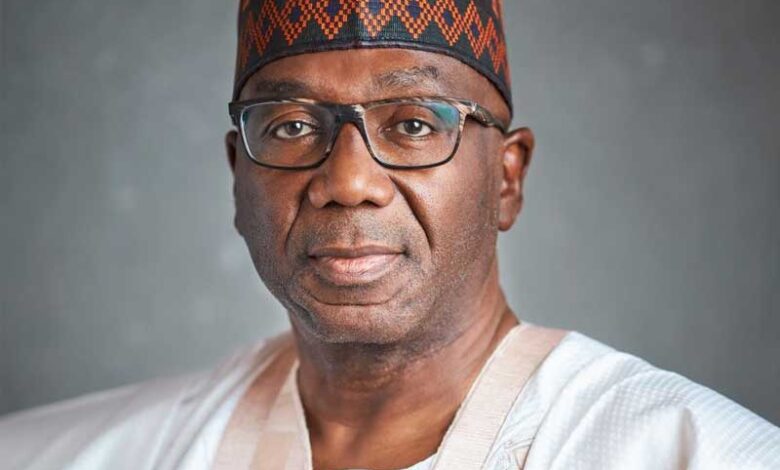
Kwara State Governor AbdulRahman AbdulRazaq has recorded measurable and visible achievements in the health sector and other areas, Commissioner for Health, Dr. Amina Ahmed El-Imam, said on Monday.
In a statement issued in Ilorin, Dr. El-Imam said any contrary ratings are mere political posturing.

Citing examples, she said the administration has just procured a state-of-the-art 160-slice CT scan and a modern 1.5 Tesla MRI machine, which will soon be inaugurated for public use by all Kwarans.
“In addition, modern abdominal ultrasound machines have been procured and distributed to various health facilities across the state to further strengthen diagnostic capacity,” she added.
“The Intensive Care Unit (ICU) at the Kwara State University Teaching Hospital (KWASUTH), not previously available or functional in any state facility, has also been completed and fully equipped with state-of-the-art facilities, including C-Arm machine, to enhance the care of critically ill patients and support complex medical and surgical procedures. There are a lot more.”
Reacting to a recent commentary published in a newspaper questioning the availability of MRI services and the broader state of healthcare delivery in the state, El-Imam said it is important that discussions around healthcare services are guided by facts and an objective assessment of ongoing reforms.
“At the inception of the present administration, a comprehensive assessment revealed that most inherited health infrastructure and medical equipment were either dilapidated, obsolete, or non-functional. This situation cut across primary and secondary health facilities in the state. The report of the transition committee was as clear as were the several poor indices the administration inherited at the time,” she said.
“Specifically, the MRI machine previously installed at the Harmony Advanced Diagnostic Centre (HADC) is a low field of 0.35 Tesla, which no longer met current diagnostic standards even then. Such low-Tesla machines are inadequate for modern diagnosis of neurological, oncological, spinal, and complex medico-surgical conditions,” she said.
El-Imam said the administration acknowledged that the shortage of health personnel, particularly doctors, is a national and global challenge which has impacted negatively on the sector nationwide.
“Beyond infrastructure and equipment, the administration recognises that healthcare delivery is important and driven by human resources. It is widely acknowledged that the shortage of health personnel, particularly doctors is a national and global challenge, largely driven by the ‘Japa’ syndrome, a trend that has become more pronounced in recent years. This has resulted in inadequate deployment of the requisite health workforce to many rural and hard-to-reach communities across the country,” El-Imam maintained.
On medical and health workers salary structures, the commissioner noted that Kwara State currently pays the revised CONMESS and CONHESS salary structures, in line with what obtains at the federal level, across all cadres of its health workforce.
“In response, massive recruitment of healthcare workers across all cadres—medical officers, specialists, nurses, pharmacists, and house officers was conducted while the recently approved recruitment of 150 nurses – is ongoing,” she said.
“Regarding specialist training, 41 resident doctors are presently undergoing training in various specialties, supported by the state government through the regular payment of the Medical Residency Training Fund (MRTF). Notably, Kwara State was the first state in Nigeria to commence payment of the MRTF in 2025, underscoring its leadership in health workforce development.”
The commissioner said the Kwara State Government initiated a statewide free medico-surgical outreach programme to deliver specialised healthcare services.
“These services include medical consultations and treatments, provision of free drugs, eye and general surgeries, and the free distribution of eyeglasses to indigent Kwarans and residents of hard-to-reach communities across all 16 local government areas of the state,” she said.
“This intervention is designed to complement existing healthcare services while ensuring equitable access to care for all Kwarans. In 2025 alone, 10,374 Kwarans benefitted from the outreach programme.
“This effort is further reinforced by the aggressive enrollment of residents into the KwaraCare (Health Insurance) programme, which continues to expand access to affordable healthcare. reflecting the administration’s commitment to universal health coverage.”