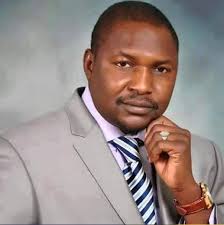
The cry of persecution emanating from the camp of the former Attorney-General of the Federation and Minister of Justice, AbubakarMalami, over his arrest and detention by the Economic and Financial Crimes Commission is a far cry from what he unleashed on people while in office, Wale Igbintade writes.
The unfolding confrontation between former Attorney-General of the Federation and Minister of Justice, AbubakarMalami (SAN) and the Economic and Financial Crimes Commission (EFCC) is far more than a clash of personalities. It has evolved into a defining moment for Nigeria’s justice system, testing not only the independence of its anti-corruption institutions but also the sincerity of elite commitment to the rule of law.

Malami, who is facing an investigation for 18 alleged offences, including money laundering, abuse of office, and terrorism financing, and his detention, is claiming that he is being persecuted by the anti-graft agency for political reasons.
At the heart of the controversy lies a fundamental question: can a former Chief Law Officer of the Federation legitimately resist investigation through public outrage instead of judicial process?
Malami’s demand that EFCC Chairman, Ola Olukoyede, recuse himself from an investigation involving him on allegations of bias, personal vendetta, and political persecution—marks a sharp and troubling departure from the legal principles he once vigorously defended while in office.
Rather than embracing the courts as the constitutionally recognised forum for resolving disputes, Malami has chosen to wage his defence in the court of public opinion, relying on press statements and political narratives to preempt institutional scrutiny.
This approach has attracted widespread criticism, particularly from voices who view it as inconsistent with his own record as Attorney-General. One of the interventions came from the Chairman of the Forum of Former Members of the Enugu State House of Assembly (FOF-MEHA), Josef Onoh.
In a statement issued from Paris, Onoh described Malami’s call for Olukoyede’s recusal as “pathetic, unfortunate and desperate,” arguing that it amounted to an attempt to blackmail and intimidate the anti-graft agency.
Onoh dismissed Malami’s reliance on Chapter Nine of the Justice Ayo Salami Judicial Commission of Inquiry Report as legally unsustainable, insisting that nothing in the report bars the EFCC from investigating former public officials, including a former Attorney-General.
According to him, the invocation of the report was a deliberate misrepresentation designed to confer on Malami a false sense of immunity from scrutiny.
More significantly, Onoh underscored what he described as the irony of Malami’s sudden discovery of persecution. He recalled that as Attorney-General, Malami presided over and defended several prosecutions that were widely criticised as politically motivated.
Among the most prominent was the prolonged detention of former National Security Adviser, Col. Sambo Dasuki (rtd), despite multiple court orders granting him bail. Onoh also referenced the prosecution of former Peoples Democratic Party (PDP) spokesman, OlisaMetuh, as well as the proscription of the Indigenous People of Biafra (IPOB) and the handling of NnamdiKanu’s case, all of which, he argued, illustrated an expansive and often coercive use of prosecutorial power under Malami’s watch.
These recollections are not mere historical footnotes. They form part of a broader pattern that weakens Malami’s current posture. As Attorney-General, he repeatedly insisted that investigation did not amount to guilt and that only courts were empowered to determine culpability.
Today, confronted with investigative scrutiny, he appears unwilling to submit to the very process he once urged upon others. The contradiction is difficult to ignore and has done little to strengthen public sympathy for his claims.
Onoh further accused Malami of orchestrating the 2020 removal of former EFCC Acting Chairman, Ibrahim Magu, describing it as a vindictive power struggle rather than a principled anti-corruption intervention. He noted that Malami levelled more than 22 allegations against Magu and supervised the Justice Ayo Salami Panel that investigated them. Yet, despite the gravity of those allegations, Magu was never prosecuted or convicted of any offence. His career, however, was effectively destroyed. To Onoh, this episode exemplifies a troubling pattern in which allegations are weaponised for control rather than pursued to logical legal conclusion.
Beyond personalities, the legal point remains central. Onoh argued that Olukoyede’s role as Secretary to the Salami Panel does not amount to a conflict of interest requiring recusal. He stressed that recusal is a doctrine applicable to judicial or quasi-judicial proceedings, where impartial adjudication is required, not to routine law-enforcement investigations. To conflate the two, he warned, is to distort settled legal principles and undermine the operational independence of investigative agencies.
This position reflects established jurisprudence. Allegations of bias or selective prosecution are not resolved through media exchanges. They are addressed through motions, affidavits, cross-examination, and judicial review. Courts exist precisely to test claims of institutional abuse and protect individual rights. By sidestepping these mechanisms, Malami risks creating the impression that he seeks exemption from accountability rather than vindication through due process.
Civil society organisations have echoed similar concerns. The Centre for Anti-Corruption and Accountability (CACA) described Malami’s posture as ironic and unbecoming of a former Attorney-General and Senior Advocate of Nigeria. The criticism resonates because holders of high prosecutorial offices carry an enduring obligation to respect the institutions they once commanded. That obligation does not diminish after leaving the office; if anything, it increases.
The broader operational record of the EFCC further complicates claims of political persecution. The commission has investigated and prosecuted individuals across party lines, including politically influential figures associated with the ruling party. The arraignment of Senator Chris Ngige and the ongoing investigation of former Delta State Governor, IfeanyiOkowa, despite his political realignment—undermine assertions that the EFCC operates as a partisan tool. Political affiliation, in law, has never constituted a shield against investigation.
Perhaps the most uncomfortable backdrop to Malami’s current protest lies in the memory of judicial raids carried out during his tenure as Attorney-General. The night-time invasions of the homes of serving judges—widely condemned as assaults on judicial independence, remain among the darkest chapters in Nigeria’s recent legal history. The judges were publicly humiliated, and later exonerated, but the judiciary was left deeply shaken.
Not done, the former AGF also instigated the removal from office, of the then Chief Justice of Nigeria (CJN), Justice Walter Onnoghen, through the Code of Conduct Tribunal over hopeless allegations. Those legacies continue to inform public perception.
Against this background, appeals to institutional victimhood ring hollow. Accountability, as Onoh observed, is reciprocal. A former Attorney-General who presided over such excesses cannot plausibly demand exceptional sensitivity when the investigative lens turns inward.
On its part, the EFCC has maintained that it will not be intimidated or blackmailed into abandoning lawful investigations. Onoh reinforced this stance, warning that attempts to undermine the commission would fail under the Tinubu administration. He urged Malami to submit himself to investigation if confident of his innocence and challenged him to publicly declare his assets prior to assuming office—an act that would lend credibility to his claims.
Also reacting to Malami’s claim that the EFCC was acting political script in its dealings with him, a former Chairman of the National Human Rights Commission (NHRC), Prof. ChidiOdinkalu, criticised the former AGF, describing him as a “grubby, vexatiously political Attorney-General” during his tenure.
He added that if the former AGF now believes the EFCC is politicised, he should remember that “they’re following what he taught them.”
“Someone should tell AbubakarMalami to please sit this out. If he’s now complaining that EFCC is political, they should tell him that they’re following what he taught them. They have no need to deny it!”
Nigeria’s democracy cannot afford an accountability framework that collapses under pressure from powerful former officials. Where the EFCC errs, the courts exist to correct it. Where investigators overreach, judicial oversight provides remedy. What remains impermissible is the attempt to delegitimise lawful investigation simply because the subject once occupied high office.
At its core, this episode is about leadership by example. Arraignment is not humiliation; it is the lawful gateway to exoneration. A person confident in his innocence does not fear the courtroom—he embraces it. Delay, diversion, and media advocacy only deepen suspicion and erode public trust.
Ultimately, the Malami–EFCC standoff transcends the individuals involved. It exposes a persistent weakness in Nigeria’s political culture: resistance to accountability once power has been relinquished. In a constitutional democracy, former authority confers no permanent privilege.
The courts remain open. The law is clear. What remains is the willingness to submit to both. In Nigeria’s justice system, there is no higher vindication, and no credible alternative.