
Professionals from different disciplines in the aviation industry have suggested various ways to ease the pains and ensure progress in the sector over the next 12 months.
They spoke during different interviews with our correspondents. A retired airline captain, Muhammed Badamosi, raised concerns over the state of Nigeria’s aviation sector, warning that years of neglect, weak regulation, and poor infrastructure could push the industry to the brink of collapse if urgent reforms are not undertaken.

Badamosi likened the sector’s development to “a journey where you take one step forward and two steps backwards,” arguing that little has changed over the past decade.
“In terms of infrastructure, financing, and regulatory oversight, the aviation sector today is no better than it was 10 years ago. Which of these areas has truly improved? We need to ask ourselves honest questions if we want progress.”
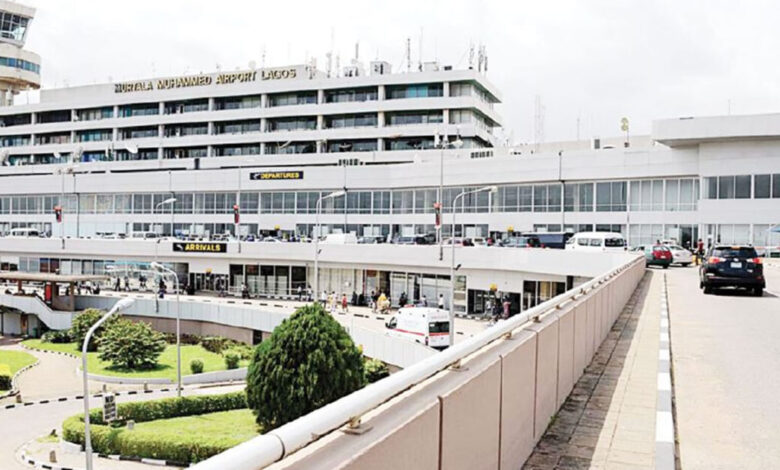
According to the retired pilot, Nigeria’s major airports are still operating with obsolete navigation systems that the rest of the world has long abandoned.
Badamosi explained, “Since the 1980s, most of our major airports have relied on Category 2 Instrument Landing Systems and VOR for navigation. Globally, aviation has moved on to Category 3-1, 3-2, and even 3-3 systems. What are we still doing here, more than 20 years after joining the world on Category 2 ILS?”
He noted that while Nigeria is spared the extreme winter conditions of the northern hemisphere, the limitations of Category 2 ILS still pose risks. He said, “In severe weather, Category 2 ILS is practically useless. We are only lucky that what we deal with here is mostly harmattan haze and short-lived fog.”
Badamosi also pointed to deteriorating airport infrastructure, including runways and taxiways that require urgent rehabilitation or outright reconstruction.
“Have we achieved total radar coverage under TRACON? I don’t think so. These are the things that make airports safe. Without them, safety is compromised.”
Another major concern raised was the prevalence of ageing aircraft in the country’s fleet, many of which are second-hand. He cited recent incidents involving nose-wheel collapses during landing or taxiing as troubling signs.
“Some of these incidents should never have happened,” Badamosi said. “In some cases, the Nigerian Civil Aviation Authority is complicit because of corruption in the system.”
Badamosi criticised the current structure of aircraft inspection within the NCAA, noting that inspectors often stay far longer than regulations allow. “Inspectors are meant to be engaged on three-year contracts, renewable for just one year. Today, some have been in the system for over eight years.”
He explained that the original policy was designed to reduce the risk of inspectors becoming compromised by operators. “If you ask the Director-General, he may say it’s cost-effective,” Badamosi said. “But it’s time we weigh the cost of training against the cost of flight safety.”
He also described federal funding for aviation as inadequate, noting that about N714bn has reportedly been budgeted for aviation services. “That amount is highly inadequate for a sector as capital-intensive as aviation,” he said.
As a solution, Badamosi suggested concessioning some airports to reduce the financial burden on the government and improve efficiency. “The government can help itself by concessioning airports if Nigeria wants to be highly rated in global aviation,” he said.
Looking ahead, he stressed the need for sustainable financing and strategic partnerships. “Aviation is capital-intensive. Both airlines and service providers need sustainable financing to meet the challenges ahead. Members of the Airline Operators of Nigeria should seek partnerships with foreign airlines willing to operate here.
“One of the reasons foreign airlines are reluctant to lease aircraft for operations in Nigeria is the state of our infrastructure. If these issues are not addressed urgently, the sector risks collapse and possible blacklisting.”
Also speaking, the President of the National Association of Nigerian Travel Agencies, Dr Yinka Folami, insisted that the controversial claim about 18 taxes on airline operators was unfamiliar to industry professionals with decades of experience in airfare construction and ticketing.
He called for a government probe of the claim for the benefit of all. He explained that in over 50 years of NANTA’s existence, the assertion of 18 government taxes on a single ticket was new to the association, which has over 4,000 registered members.
He, however, said the claim of 18 taxes on each ticket may not be impossible but insisted it required proper enquiry and deconstruction. “Unfortunately, everyone has become an expert on aviation taxes. But leadership demands focus. Let us stop speculation and interrogate the construction of these alleged 18 taxes.”
“In June, a Lagos–Abuja one-way ticket sold for about N100,000 or less. By December, it jumped to between N200,000 and N250,000. Government taxes did not change within that period. So, the increase cannot be attributed to taxes.”
He insisted that such fare increases were a result of airline business decisions influenced by seasonal demand, not government policy.
Also commenting, travel analyst Lucky George attributed the persistent fare challenge to capacity constraints by Nigerian airlines, rather than taxation. George said the Nigerian aviation market serves over 200 million people, yet capacity is limited, stressing that high fares are largely a result of supply failing to meet demand.
He argued that high prices have made air travel inaccessible to a large segment of the population, despite strong demand. George also canvassed the re-establishment of a new national carrier, declaring that the current indigenous airlines lack capacity.
Industry expert Olumide Ohunayo emphasised the need for stronger collaboration among airport authorities and for unruly passenger cases to be taken beyond media attention to actual prosecution.
He also argued that rising airfares should not be dismissed as a seasonal issue. According to him, government support in helping airlines acquire more aircraft and establish local maintenance, repair, and overhaul facilities would ease capacity constraints and ultimately reduce ticket prices.
“First, I really want to see real synergy among airports and take unruly cases beyond the airport and media to the prosecution stage. We have seen in other climes where offenders are punished by the law because of rules that automatically take effect when airport laws are violated.
“The system follows through to ensure that airport offenders are punished, but here, what we see is that after media reports, everybody goes to sleep. That is why we continue to have a recurrence of bad behaviour at our airports. Nobody should be above the law.
“Rather, the government should continue to help airlines get more aircraft and also establish MROs within our domain. These measures will help drive airfares downward. What we have noticed is that there is a capacity constraint, and this aspect needs serious attention at this time.”