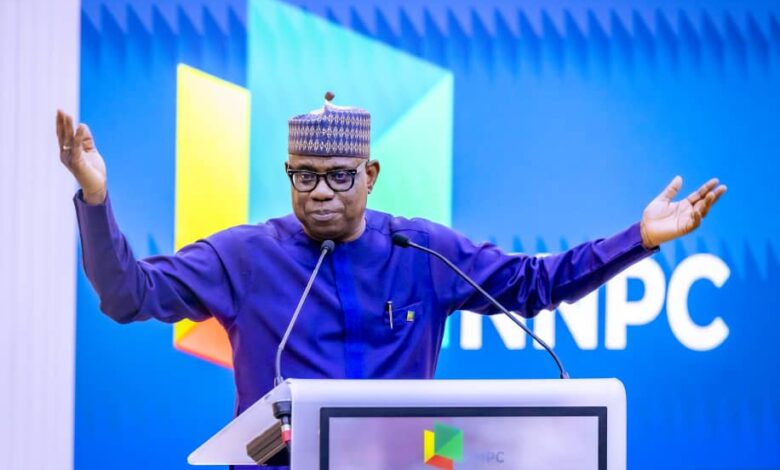

Group Chief Executive of the Nigerian National Petroleum Company Limited, Bayo Ojulari, on Thursday said Global oil giant, Shell Plc, is set to deploy approximately $20bn in Nigeria’s oil and gas sector over the coming years.
He said the drive shows the impact of President Bola Tinubu’s recent policy reforms on investor sentiment in Africa’s largest oil producer.

This followed a high-level meeting at the State House between Tinubu and Shell’s Chief Executive Officer, Wael Sawan.
It was the first such engagement between a sitting Shell global chairman and the Nigerian President.
Ojulari told State House correspondents that Shell’s renewed investment appetite reflected the international business community’s assessment that Nigeria had substantially improved its operating environment.
“The competition for investment is global,” he said, acknowledging that energy companies continuously evaluate investment options across competing jurisdictions including Guyana and parts of the Far East.
“One of the great things that Mr. President did was to announce those executive orders to put additional incentives in place to attract investments,” he said.
According to Ojulari, Shell’s capital commitment comes after the company ploughed over $7bn into Nigeria since Tinubu introduced the executive orders designed to improve the investment climate in 2024.
He said the rapid deployment followed three major strategic moves by Shell in the Nigerian upstream sector.
The company first divested its onshore joint venture assets to Renaissance, a transaction Ojulari described as a confidence builder for the international investor community.
“That brought confidence to the international community, including Shell,” the NNPCL boss said, noting that the successful exit demonstrated the administration’s commitment to allowing capital to flow freely in and out of the market.
Following the divestment, Shell took a final investment decision to commit $5bn to the Bonga North deepwater project.
The company subsequently approved an additional $2bn investment for a shallow-water gas development initiative.
He said the Bonga Southwest project also featured in Thursday’s talks.
He noted that Shell is working toward a final investment decision on the deepwater development, which would require approximately $10bn in capital expenditure alongside substantial operating costs.
Ojulari suggested that approval of Bonga Southwest and similar projects would trigger broader economic benefits beyond hydrocarbon production itself.
Such developments, he said, will typically generate employment across fabrication, construction, maintenance and supply chain operations over the 20 to 30-year productive lifespan of oil and gas fields.
“For many years, fabrication yards have been idle because there were no projects. Those yards will come back to life,” Ojulari said, emphasising that the revival of dormant industrial infrastructure would create sustained employment opportunities for Nigerian workers and businesses.
The NNPCL chief also attributed the improved investor outlook directly to President Tinubu’s demonstrated commitment to sector reform and transparency.
He noted that while the Petroleum Industry Act of 2021 had established a foundational legal framework, additional targeted incentives were necessary to ensure Nigeria remained competitive in attracting scarce global energy capital.
“We needed those executive orders to adjust and fine-tune the competitive position of Nigeria,” Ojulari stated, characterising the policy adjustments as essential to countering rival jurisdictions’ own incentive packages.
The NNPCL Chief pledged that his organisation would continue partnering with international investors and government agencies to develop and advance credible project proposals.
“Our responsibility is to be the conscience of the government and the conscience of Nigerians, ensuring that the assumptions and promises being made are correct and authentic,” he said.