


After 13 years of leadership disputes, court battles, violence and deep internal divisions, the United Methodist Church in Nigeria last Thursday drew the curtain on one of the darkest chapters in the church’s history as church leaders agreed on a sweeping reconciliation, administrative restructuring and fresh leadership pathway.
The breakthrough, according to the communique and resolution Committee Chairman Rev. Abainitus Akila Hamman Jnr and made available to our correspondent in Jalingo came at a joint session of the five Annual Conferences of the UMC Nigeria Episcopal Area, together with the districts of Cameroon and Senegal, held on December 5, 2025, at the Jolly Nyame Stadium, Jalingo, Taraba State.
At the meeting, delegates unanimously adopted a Deed of Reconciliation and a comprehensive boundary demarcation report that resolved long-standing overlaps between conferences, formally ended all pending disputes and laid the groundwork for a more stable and united church.
Central to the resolutions was the decision to rename the Southern Nigeria Annual Conference as the Southwest Nigeria Annual Conference, following years of confusion and rivalry arising from its similarity with the Southern Conference of the United Methodist Church.
Before the adoption of the full report, delegates voted on the headquarters of the newly renamed conference, with Mutum Biyu in Taraba State polling 1,315 votes to emerge as its headquarters.
The joint session also approved the creation of two Episcopal Areas in Nigeria, citing the numerical growth of the church and the need for effective administration.
Under the new structure, the Southern Nigeria Episcopal Area, with headquarters in Jalingo, will comprise the Southern Conference of the UMC, the Southwest Nigeria Annual Conference and the Cameroon Mission District.
The North-Central Nigeria Episcopal Area, headquartered in Abuja, will oversee the Central Nigeria, Northeast Nigeria, and Northern Nigeria Annual Conferences, alongside the Senegal Mission District.
The meeting further endorsed a complete re-demarcation of Nigeria’s 36 states, the Federal Capital Territory and the mission fields of Cameroon and Senegal into five Annual Conferences, a move church leaders said would eliminate jurisdictional conflicts and enhance efficiency.
In preparation for the election of an additional bishop in Nigeria, expected to take place at a special session of the West Africa Regional Conference in December 2026, each Annual Conference elected four voting delegates and two alternates to represent it at the exercise.
Beyond structural reforms, the joint session formally acknowledged that disagreements surrounding the 2012 episcopal election and conference boundaries had fractured the church, disrupted fellowship and led to loss of lives and property, despite interventions by the Taraba State Government and the Christian Association of Nigeria.
In the Deed of Reconciliation adopted at the meeting, the parties offered mutual apologies, forgave one another, and pledged to restore peace, unity, and cooperation within the church.
They also agreed to withdraw all complaints, petitions, and pending legal actions and recommit themselves to non-retaliation and mutual respect in line with Christian teachings.
To prevent a relapse into crisis, the agreement clearly defined boundaries between conferences, particularly between the Southern Conference of the UMC and the newly named Southwest Nigeria Annual Conference, detailing roads, communities and districts assigned to each body.
It also outlined the distribution of states across the five Annual Conferences under the two Episcopal Areas.
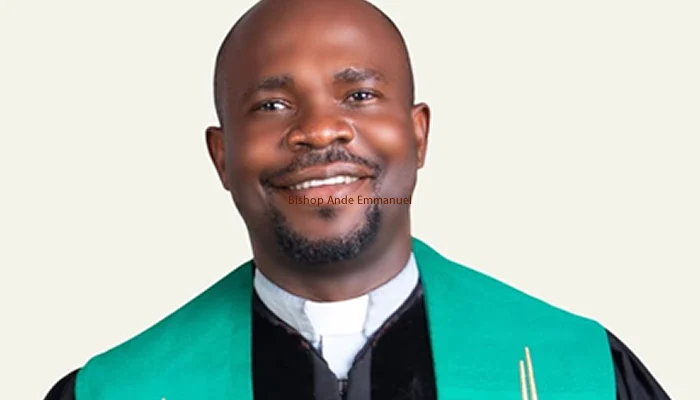
The resolutions and reconciliation deed were signed by the conference secretaries of the five Annual Conferences and endorsed by the Presiding Bishop of the Nigeria Episcopal Area, Bishop Ande Emmanuel, making them binding on all leaders and members of the United Methodist Church in Nigeria.