

The South East All Progressives Congress’ recent endorsement of President Bola Tinubu reflects a pragmatic political realignment that could help the region reclaim lost influence and unlock renewed opportunities at the centre, writes Gideon Arinze.
For the people of the South East region, it was a fundamental shift in political alignment at the weekend as three of the five South East governors as well as All Progressives Congress (APC) leaders, lawmakers, elders and critical stakeholders from across the zone reviewed the region’s political fate and undertook to align fully with the ruling party at the centre and also endorse President Bola Tinubu.
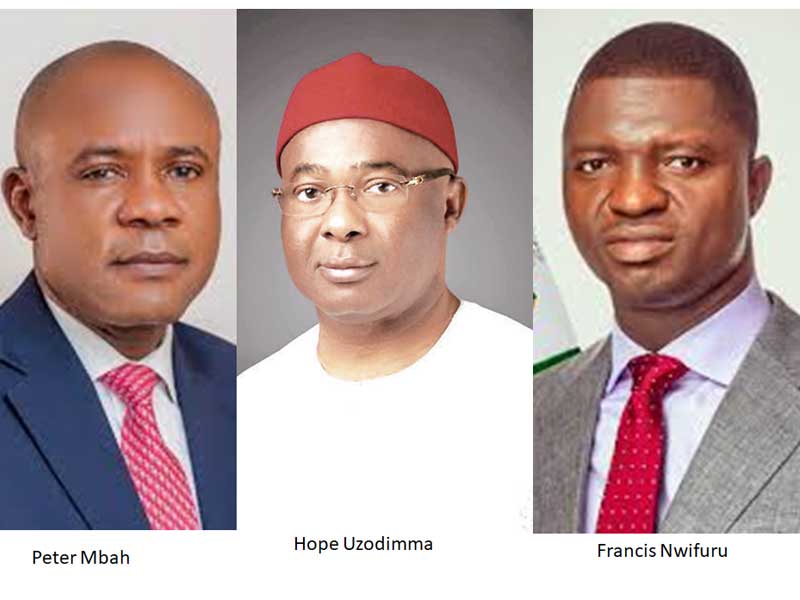
The import of the South East APC stakeholders’ meeting, which held at the Presidential Hotel, Enugu, was underscored by the colour of the attendees, as it turned out to be a gathering of who is who in the South East region: Chairman of the South East Governors’ Forum and Governor of Imo State, Senator Hope Uzodimma; Governor of Enugu State, Dr. Peter Mbah; Governor of Ebonyi State, Hon. Francis Nwifuru; Deputy Speaker of the House of Representatives, Hon. Benjamin Kalu; former Presidents of the Senate, Senator Anyim Pius Anyim and Senator Ken Nnamani as well as former governors, serving and ministers, federal and state lawmakers, among a host of others.
Recall that in May, 2025, Governor ChukwumaSoludo of Anambra State, elder statesman, EmekaAnyaoku, and traditional rulers, among other stakeholders from across the state openly endorsed Tinubu’s leadership, pledging their support for him in 2027. This means that Tibubu has secured the endorsement of four of the five South East governors. With Governor Alex Otti’s refusal to move with former Labour Party’s presidential candidate, Mr. Peter Obi to the All Democratic Congress (ADC), an alliance with the ruling party to strengthen his re-election bid cannot also be ruled out.
Expectedly, keen observers of the political handwritings on the wall, have interpreted the weekend endorsement of President Tinubu as a clap back on Obi, who had in Enugu nearly a fortnight ago dumped the LP and declared for the ADC where he is eying the presidential ticket.
However, feelers from among political leaders of the South East is that having suffered the aberration of inability to produce the president of the country since 1999 and indeed since independence, the region must restrategise, play the right politics going forward.
For context, the South East aligned with the Peoples Democratic Party (PDP) at the break of the current democratic dispensation, voting massively for the party from 1999 to 2019. Thus, 2023 was seen as the region’s turn to fly the presidential flag. More so it suffered huge denials under the late former president, Muhammadu Buhari for its support for the PDP. But that turn was twisted as former Vice President, AlhajiAtikuAbubakar, eventually clinched the ticket. The protest votes that followed saw Obi sweeping 88 per cent of the votes, leaving Tinubu with six per cent and Atiku, generally seen by the region as a usurper garnering only a paltry four per cent.
The result was that as predicted by former Deputy President of the Senate, Senator Ike Ekweremadu, neither Obi nor Atiku was able to win, having divided their votes since they were from the same PDP constituency, a situation that would leave the region waiting till at least 2039 to nurse the hope of producing Nigeria’s president.
For the South East, it was particularly an unpalatable experience: Obi was unable to win to correct what the region and many see as a retinue of marginalization and injustices against it, and with a mere six per cent of the votes going to Tinubu, it lacked the bragging rights to negotiate with the eventual winner on matters affecting the zone.
Therefore, the general feeling that with Obi still unlikely to win the 2027 presidential election even if he gets the ticket ahead of Atiku and, some say, ex-president Goodluck Jonathan, who it is rumoured, could be heading for the ADC in the coming weeks, Obi is still not likely to win.
It was no doubt against this backdrop that the governors and stakeholders of the South APC endorsed President Tinubu for a second term in office at the weekend, insisting that pragmatic politics based on bridge-building, partnership, and aligning with the centre to sustain the gains accruing from the president’ administration and nurture a realistic hope of ultimately producing a Nigerian president of South East extraction had become an imperative for the Igbo nation.
In doing so, they acknowledge that it’s a big task, especially given what many perceive as the region’s emotional approach to politics. Therefore, they vowed to go down to the grassroots to mobilise massive votes for Tinubu’s re-election and also resist any individual’s ambition capable of undermining dissipating Igbo votes and a collective bargain.
Therefore, in the communique signed by the governors, party leaders, and stakeholders, and presented by South East zonal Chairman of the party, Dr. IjeomahArodiogbu, the leaders unanimously declared their total support for President Tinubu, suing for unity of purpose to reposition the Igbo politically.
“The people of the South-East Zone categorically dissociate themselves from all activities motivated by the self-serving interests of any individual, however highly placed. We affirm that the progress of our zone and our great party cannot be achieved through narrow personal ambitions or actions that fracture collective unity.
“Any such conduct shall henceforth be regarded as contrary to our shared aspirations and will receive neither endorsement nor support from our zone.
“The political leadership of the South-East has resolved, in the supreme interest of Ndi Igbo, that never again will we allow personal ego and motivated actions to influence the fate of the Zone. in this regard, the South-East will join other zones in supporting the ruling party, wherein our leaders can effectively negotiate better representation and interests of our people,” they stated.
They urged Ndigbo within and outside Nigeria to embrace the APC as the most viable platform for advancing the region’s political and economic interests, warning that scattering votes across multiple parties had historically weakened the South East’s influence at the national level.
Governor Uzodimma had earlier told the gathering that the South East could no longer afford political isolation, noting that the region’s megre contribution to APC’s victory in the 2023 presidential poll dealt a great blow to its bargaining power at the national level. He regretted that while other zones contributed between 34 and 54 per cent of votes to Tinubu in 2023, the South East recorded about six per cent, a situation he described as politically unsustainable.
According to him, the political tide in the region has since changed, pointing to the growing strength of the APC in the South East when the party now controls three out of the five states, while its representation in the Senate had risen from six to eight senators, with region’s APC lawmakers in the House of Representatives had moved from eight to 23.
“These numbers give us hope, but they also give us a challenge,” Uzodimma said.
“The growth we see among leaders must reflect at the ballot box in 2027. Politics is pay as you earn. No zone can produce a president alone, and if we continue to vote provincially, we will remain on the sidelines of national power,” he added.
Governor of Enugu State, Dr. Peter Mbah, in his address, described the endorsement of President Tinubu and the increasing alignment of the South East with the APC as a “paradigm shift grounded in pragmatism.” He sstressed that the region had moved from “standing at the crossroads of history to shaping history itself.”
According to him, the decision to support Tinubu’s re-election was rooted in facts, vision and the tangible benefits already accruing to the region from alignment with the centre.
Mbahemphasised that for the South East, “there has been a clear recognition from the federal government that national progress cannot be achieved with any region standing at the margins.”
He cited federal projects such as the revival of the Eastern Railway corridor, gas and energy development initiatives in the region, and the approval of the concession of the Enugu Airport, which he said would position the state as an international gateway for the South East.
“The Renewed Hope Agenda is beyond a political slogan,” Mbah said. “It is about aligning vision at the centre with delivery at the states. These are not symbolic gestures but strategic decisions that show a federal leadership committed to inclusive governance.”
He said South East’s political redemption rested on aligning strategically and banishing the culture of fragmentated politics.
“Our region’s chequered history reminds us how easily progress can be undone when unity gives way to fragmentation. In collectively affirming an end to decades of fragmented politics in the South East, we are saying that the South East will no longer stand as a divided political unit.
“This is a moment to think clearly and act strategically, and to remain focused on outcomes. Let us lean into partnership, not retreat into suspicion.
On his part, Governor Nwifuru of Ebonyi State expressed confidence that by 2027 an overwhelming proportion of the South East population would be APC. He, however, urged party leaders to embrace reconciliation and sacrifice, noting that the influx of new members required effective internal management rather than further party building.
There were also lessons impacted in moving the motion for Tinubu’s endorsement by Senator Anyim, and its being seconded by Senator Nnamani.
According to Nnamani, rather than crying in the rain, South East’s complaint about marginalisation could only be sufficiently addressed by playing the right politics that connects the region to the centre.
“If you cry in the rain, nobody would notice you. If you want to avoid the rain, you must enter the shade,” he said, enjoining the South East people to embrace the APC and align with the centre.
While there is obviously a lot of work to be done to deepen APC in the region, one thing to be taken away from the endorsement is that pragmatism is taking a front seat among the South East leaders. Again, unlike in 2023, the South East people know early in the day where their leaders stand and where they should go come 2027.