The Central Bank of Nigeria (CBN) reaffirms its commitment to educating consumers on key issues around financial services offerings and complaints resolutions. Issues around financial literacy, complaints resolutions, entrenching right to privacy and confidentiality are receiving regulatory support. Already, the Customers Bill of Rights approved by the CBN highlights the central role of customers in business success, and role of banks in ensuring safe and secured banking system. Precious Ugwuzor reports.
As a financial sector regulator, theCentral Bank of Nigeria (CBN) has a duty of care, ensuring that it provides excellent guidance that ensures that bank customers get the best services for their patronage.


Central to achieving this goal is the need provide financial literacy, complaints resolution mechanisms, protecting customers’ right to privacy and confidentiality.
The regulator has also gone a step further by providing guidance to bank customers on what their obligations to the lender are.
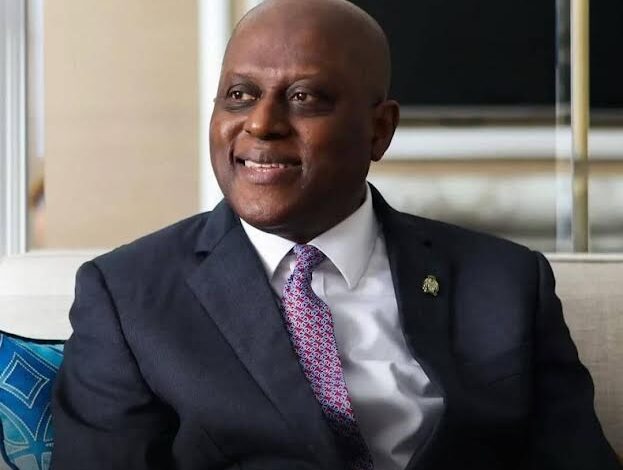
According to CBN Governor, Olayemi Cardoso, while the apex bank continues to lay the foundation for price stability and foster a conducive policy environment, the role of banks in this journey remains crucial.
“At the Central Bank, we have intensified surveillance of market activities to ensure compliance. Together, we must build a market based on strong governance and transparency. As regulators, we will maintain a zero-tolerance approach to compliance violations,” he said.
On its Consumer Education Series shared across social media platforms, the CBN educated bank customers on what they need to know about Bank Verification Number (BVN) Watchlist.
It said: “Do You Know that your Bank Verification Number is more than just numbers, it is your financial identity in the Nigerian banking system. BVN Watchlist contains the records of individuals or institutions who have been confirmed to engage in fraud, financial misconduct or serious violations of banking rules.
Continuing, it said: “If your BVN is listed: Go to your bank, find out what exactly the problem is and work to settle it; Do not forget to use your BVN and your account responsibly, honor your financial obligations and never participate in, support or benefit from fraud.
The CBN also highlighted issues around understanding the difference between needs and wants as it provides financial literacy lessons to the public.
It asked: “Did you know that financial literacy helps you distinguish between your needs and your wants? Smart money management starts with knowing the difference. When you understand this, you are better equipped to make informed decisions about how to spend, save, and budget your money”.
It explained further: “Needs are essentials things you must have to live and function. These include food and water, basic healthcare, shelter or rent, school fees, and other necessities. Wants are things that are nice to have but not essential for survival. They add comfort, style, or enjoyment, such as eating out frequently or buying luxury items. Before you spend, pause and ask yourself: Do I need this, or do I just want it?”.
Earlier, the apex bank unveiled the Bank Customers’ Bill of Rights during “CBN Fair” held in Lagos, with theme: “Driving Alternative Payment Channels as Tools for Financial Inclusion, Growth and Accelerated Economic Development” highlights the rights of customers and their obligations to the banks.
The Bill of Rights, insisted that a bank customer has a right to be informed, right to choose, right to safety, right to privacy and confidentiality, and the right to redress. Others include right to good service, right to equality and right to free monthly statement of account.
On the other hand, the report listed certain obligations that a customer owes to his or her bank. They include duty to financial obligations, duty to protect instruments and information, duty to provide factual information and not to mislead the bank, duty to report suspected fraud or error and duty of personal safety and safety of assets.
Speaking during the event, the CBN Acting Director, Corporate Communications Department, Mrs. Hakama Sidi Ali, said the Management of the CBN, under the leadership of Cardoso, is committed to protecting the rights of bank customers and promoting quality services.
Ali said the core objective of this engagement, therefore, is to sensitize members of the public on how the bank’s policies and innovations can enhance their lives and livelihood and contribute to the growth and development of the Nigerian economy.
She explained that as a means of protecting banks’ customers and ensuring that they are not short-changed, the CBN launched the Unified Complaints Tracking System (UCTS), aimed at streamlining and improving the management of consumer complaints against financial institutions. The system, alongside a USSD code (*959#) for verifying licensed institutions, enhances transparency and consumer protection in the Nigerian financial sector.
“The core objective of this engagement, therefore, is to sensitize members of the public on how the Bank’s policies and innovations can enhance their lives and livelihood and contribute to the growth and development of the Nigerian economy,” she said.
Other stakeholders insisted that at the heart of the CBN strategy is its commitment to maintaining economic stability.
“Administration prioritized an inflation targeting framework, which has been pivotal in controlling inflation and stabilizing the naira through careful adjustments in the monetary policy, rate and other instruments. The CBN has kept the economy on a steady course despite global economic headwinds,” they said.
“This year has been marked by innovative reforms and realignments, significant upgrades were made to digital platforms, automating financial processes and implementing stringent cyber security measures to protect assets and data,” they said.
The participants’ concerns around banking system stability, customer services and complaints were addressed by CBN team from the Other Financial Institutions Department, Payments System Policy Department, Consumer Protection and Financial Inclusion Department, Currency Operations and Branch Management Department, and Financial Markets Department.
Understanding the Bill of Rights
The bill of rights, described the customer as the most important person in the economy and every business succeeds only when the customer is happy.
Describing the customer as a king, it said: “As a king, the customer has many rights. But a king also has duties which he owes himself and the society. In Nigeria, customers of banks have certain rights and duties guaranteed by law, regulation and conventions”.
The report disclosed that a bank customer, has a right to disclosure of information from his/her bank on products and services the bank offers.
“The information provided must be complete, relevant and truthful. Your bank must explain to your understanding all contractual terms and charges prior to the consummation of any agreement or contract. This right enables you to have relevant information in order to make rational choices. It amounts to a breach of right if your bank fails to provide this information or deliberately misleads you in anyway,” it said.
According to the apex bank, bank customers also have a right to select from the range of products and services made available by your bank at competitive prices.
“This means that as a customer, you can, at all times, decide on the product or service to accept/purchase and the ones to decline. It is wrong for a bank to restrict your choices or compel you to accept/purchase products or services that are ill-suited for your needs. Where you are not satisfied with your bank’s service delivery on any product or service, you have the right to end the contract or even the banking relationship provided you settle all outstanding commitments,” it said.
The CBN explained that the right to safety requires a bank to guarantee all its customers a secure and conducive banking environment devoid of threats to their safety and health.
“You have the right to be reasonably protected from accidents while on the premises of your bank. You also have the right to be protected from negative effects of pollution of any kind whether arising from your bank’s operations or from other sources. It is necessary to stress that your bank is obligated to adhere strictly to applicable safety and directives to ensure that your safety and well being are adequately guaranteed while you are on the premises of your bank,” it said.
The bill of rights, described the customer as the most important person in the economy and every business succeeds only when the customer is happy
Continuing, the apex bank also highlighted the customers right to privacy and confidentiality.
It explained that as a bank customer, one has the right to freedom from disclosure of your account details by your bank as intrusion into your account by third party.
In other words, a bank is not to divulge your account information to a third party; a bank must also protect customers’ information from unauthorized access by a third party.
It however, stated that there are, expectations to this right where a bank is required by law to make disclosure; and where a customer consents to the disclosure.
“A bank must provide its customers a redress mechanism to express their displeasure or grievance. The mechanism must be free, accessible, transparent, timely and convenient. You have a right to efficient complaints management system through which you can lodge complaints against your bank. You also have the right to be kept abreast of resolution process (acknowledgment, feedback, updates, and explanation) and ultimately, basis of decision. Where you are not satisfied with the decision of your bank, you have the right of review either by your bank, the Central Bank of Nigeria (CBN) or the court,” it stated.
The CBN however, stated that all customers have a right to value for their money which involves the right to be treated with respect and dignity by banks and their representatives.
“The hallmark of banking is customer satisfaction and as such your bank would have failed if it was unable to offer quality and value-adding banking services to you as a customer. Part of this right is that your bank must provide appropriate response to your needs and complaints,” it said.
Bank customers also have the right to equality. Here, the right requires that a customer is treated equally as other customers regardless of differences in financial standing/deposit balance, physical ability, age, gender , ethnicity, or creed. It is wrong for a bank to offer preferential treatment to some customers at the expense of other similar kind of customers. However, banks may decide to differentiate customers on account of the nature of products customers purchase or subscribe to.
The report also highlighted customers obligations to their banks.
“This represents the cornerstone of your duties as a bank customer and involves the search for relevant knowledge that should lead you to make informed decisions and enhance your benefits. Without adequate knowledge, customers are bound to make ill-informed decisions which may precipitate an avalanche of complaints from customers against their banks. It is generally agreed that sophistication in the banking industry has tasked the understanding of even people that are financially literate; it is, therefore, your responsibility to “shine your eyes” when dealing with your bank,” it said.
In a world where technology is reshaping economies and redefining how people interact with financial services, alternate financial services have emerged not as an option, but as a necessity.
The apex bank is taking steps to ensure more people are brought into the digital payment network.