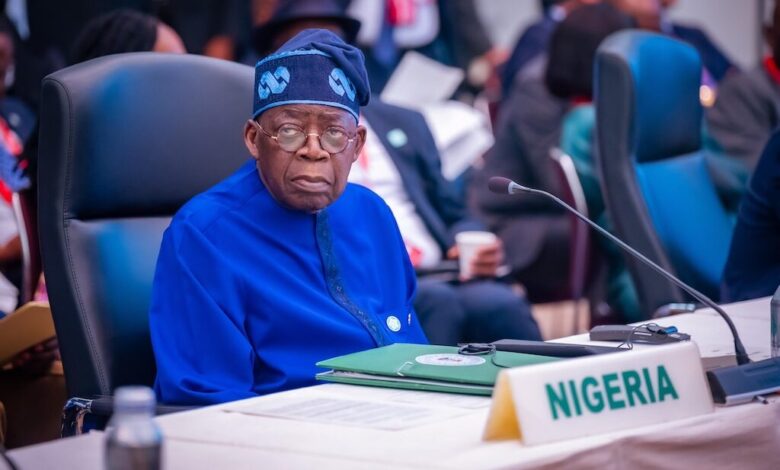

Barring any last-minute changes, President Bola Tinubu will on Friday, December 19, 2025, present the 2026 Appropriation Bill to a joint session of the National Assembly.
Ahead of the presentation, a formal communication from the Presidency is expected to be read on the floor of the House of Representatives when plenary resumes on Thursday, notifying lawmakers and National Assembly staff of the President’s appearance.


Our correspondent sighted a letter dated December 17, 2025, signed by the Secretary, Human Resources and Staff Development, Essien Eyo Essien, on behalf of the Clerk to the National Assembly, Kamoru Ogunlana. The letter was copied to the Deputy Clerk and heads of departments.
According to the letter, President Tinubu, “in his capacity as President and Commander-in-Chief of the Armed Forces of the Federal Republic of Nigeria,” will present the proposed 2026 budget to the joint sitting at 2pm on Friday.
The correspondence also detailed security and access arrangements for the day, directing all accredited persons to be at their duty posts by 11:00 a.m., adding that access to the National Assembly complex “will be restricted thereafter.”
It further advised non-accredited persons to stay away from the National Assembly complex.
In addition, “staff members except the Clerk, Deputy Clerk, Clerk of the House, Clerk of the Senate and their deputies were directed to park their vehicles at designated areas at the Annexe or the new car park by the National Assembly Service Gate.”
The annual budget presentation formally marks the transmission of the Federal Government’s fiscal proposals for the coming year to the legislature for scrutiny, debate and approval.
The presentation of the Appropriation Bill to a joint session of the National Assembly has become an established constitutional and political practice in Nigeria. Although the 1999 Constitution (as amended) empowers the President to lay the budget estimates before each chamber of the National Assembly, successive administrations have adopted the tradition of addressing a joint sitting of the Senate and House of Representatives to formally introduce the budget.
This practice allows the President to outline the government’s economic priorities, revenue assumptions and spending plans for the new fiscal year, while symbolically underscoring cooperation between the executive and legislative arms of government.
Following the presentation, the Appropriation Bill is referred to relevant committees in both chambers for detailed examination, public hearings and possible amendments before it is passed and transmitted to the President for assent.