•Procures mine-resistant vehicles, new armoured fleet for armed forces
Chiemelie Ezeobi in Lagos, Deji Elumoye and Linus Alekein Abuja

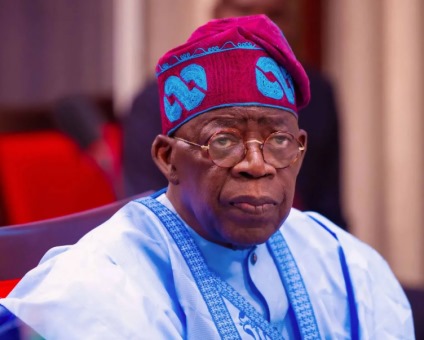
President Bola Tinubu, yesterday, reaffirmed his resolve to mobilise all military and law enforcement assets to eliminate insecurity, as well as protect the life and property of all Nigerians.
Tinubu made the pledge at the opening ceremony of Chief of Army Staff Annual Conference, holding in Lagos, where he was represented by Vice President Kashim Shettima.
The conference brought together former service chiefs, senior military officers, serving and retired, heads of security agencies, diplomats, and other distinguished guests to deliberate on strategic, operational, and administrative matters aimed at strengthening the Nigerian Army’s capacity to fulfil its constitutional duties effectively.
Reaffirming his administration’s commitment to the welfare, professionalism, and operational effectiveness of the Nigerian Army, Tinubu urged the military to maintain its apolitical stance and respect constitutional boundaries.
The president said his administration was determined to restore Nigeria’s pride of place in Africa and beyond, charging the military to remain steadfast, disciplined, and professional.
He stated, “We are primarily committed to the modernisation of the Armed Forces through improved training, modern equipment, and enhanced operational capacity to confront evolving threats.
“Following the induction of helicopters into the Nigerian Army Aviation and the training of pilots, we have advanced the procurement of additional mine-resistant ambush-protected vehicles, armoured vehicles, and patrol vehicles.
“We have also refurbished over 100 armoured fighting vehicles, now returned to active service. These efforts reflect our clear commitment to strengthening the Nigerian Army’s operational readiness.”
Tinubu said his administration was deepening partnerships with friendly nations to expand research, innovation, and indigenous production, while steadily moving Nigeria towards a new era of self-reliance in defence and security.
The president applauded the army and the armed forces’ remarkable achievements in the ongoing fight against terrorism, banditry, and other criminal activities.
He said, “The positive reports emerging from the various theatres of operations are encouraging and stand as testimony to your courage, resilience, and professionalism.
“The gains recorded through joint operations with sister services and other security agencies further underscore the power of unity of purpose in our collective resolve to safeguard the nation.”
Tinubu recognised the successes recorded by the Nigerian Army in its diverse operations and training activities.
He said the efforts had sharpened the effectiveness of troops and enhanced their capacity to operate in a volatile, uncertain, complex, and ambiguous security environments, both locally and globally.
Tinubu told the military, “The nation deeply values your sacrifices and remains grateful to the officers and soldiers who paid the supreme price in defence of our fatherland.
“Their courage is etched permanently into our national memory. As a government, we are resolved in our responsibility to care for the families of our fallen heroes, ensuring that they are supported and never forgotten.”
Lagos State Governor, Babajide Sanwo-Olu, at the oc-casion, praised the Nigerian Army for its pivotal role in national development.
Sanwo-Olu said, “History has consistently shown that security is a fundamental prerequisite for development. There can be no enduring progress without security, and no security without a capable, disciplined, and professional military.”
He added that the army’s restructuring, modernisation, and professional development reflect-ed an institution deliberately repositioning itself to meet the demands of a modern, constitutionally guided force.
Minister of Defence, General Christopher Musa (Rtd), stated, “While security challenges persist, it is evident that the operational capacity of terrorist groups, bandits, and other criminal elements has been significantly degraded across multiple theatres.
“These gains reflect the courage of our troops, improved planning and execution, and the growing impact of coordinated operations conducted within a joint and multi-agency framework.”
In his welcome address, Chief of Army Staff (COAS), Lieutenant-General Waidi Shuaibu, expressed appreciation to the president for his continued support for the Nigerian Army, particularly in welfare, training, and equipment modernisation.
Shuaibu said the army will remain at the forefront of efforts to combat terrorism, insurgency, banditry, and other criminal activities.
He stated, “While we have recorded notable successes, we recognise that the evolving security environment demands constant adaptation, innovation, and synergy.
“Accordingly, the Nigerian Army is deliberately transforming into a more professional, adaptive, and technology-driven force, capable of effectively addressing both conventional and asymmetric threats.”
The highpoint of the opening ceremony included the unveiling of a book on the life and service of the late Chief of Army Staff, Lieutenant-General Taoreed Lagbaja, and the presentation of cheques to five families of deceased soldiers, underscoring the army’s commitment to honouring its personnel.
Meanwhile, Tinubu, last night, met with all the service chiefs at State House, Abuja.
The security meeting, held behind closed-doors, took place amid rising concerns over the country’s internal security situation.
The security chiefs, led by Chief of Defence Staff, General Olufemi Oluyede, arrived at the forecourt early in the evening and were promptly ushered into the first floor office of the president.
The meeting, which began about 6:45pm, was Tinubu’s first meeting with the military high command since the recent changes in the country’s defence leadership.
The engagement followed the swearing-in of Musa as defence minister on December 4, a move that signalled a fresh approach to Nigeria’s security architecture.
While the agenda of the meeting was not officially disclosed, it came at a critical time when over 100 students abducted from a Catholic boarding school in Niger State last November were still being held by their captors, sparking nationwide concern and renewed calls for decisive government action.
The meeting also followed Tinubu’s declaration of a national security emergency last month during which he ordered the immediate recruitment of new personnel into the country’s security agencies.
He also directed the withdrawal of police officers attached to VIPs as part of efforts to strengthen internal security operations.
In addition, the talks held just days after Senate approved Tinubu’s request to deploy Nigerian troops to Benin Republic. The deployment was linked to an attempted coup in the neighbouring country, which raised both national and regional security concerns.